
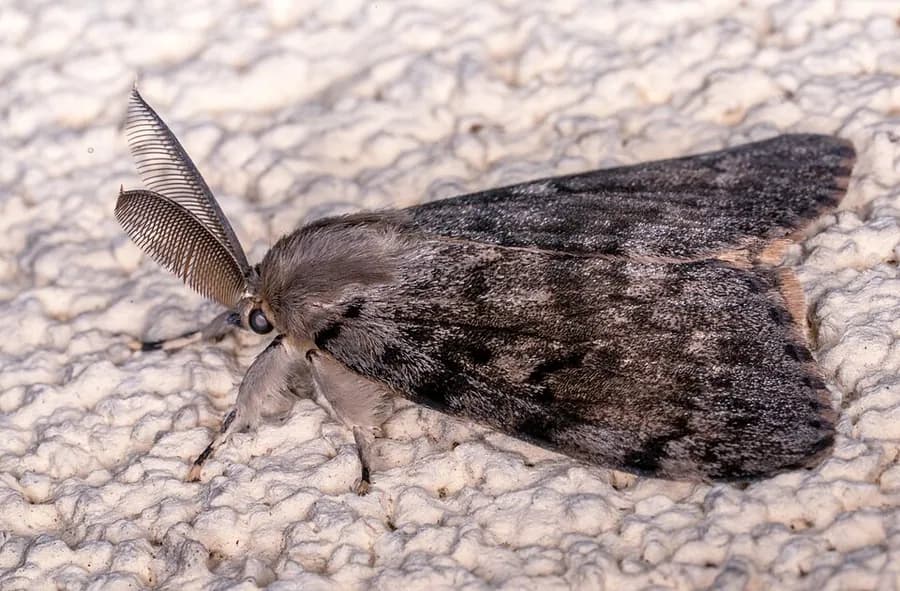
🦋Lymantria dispar
Lymantria dispar, also known as the gypsy moth, and in the United States, the spongy moth, is a species of moth in the family Erebidae native to Europe and Asia. Lymantria dispar is subdivided into several subspecies, with subspecies such as L. d. dispar and L. d. japonica being clearly identifiable without ambiguity. Lymantria dispar has been introduced to several continents and is now additionally found as an invasive species in Africa, North America and South America. The polyphagous larvae live on a variety of deciduous and coniferous trees and can cause severe damage in years of mass reproduction. Due to these features, Lymantria dispar is listed among the world's 100 worst invasive alien species.
Text: Wikipedia, CC BY-SA 4.0.
The IUCN Red List has not assessed Lymantria dispar yet.
- Body mass
- not recorded
- Body length
- not recorded
- Shoulder height
- not recorded
- Top speed
- not recorded
- Bite force
- not recorded
- Maximum lifespan
- not recorded
Everything we know about the Lymantria dispar
Typical adult figures. Where a value is an estimate rather than a measurement, it says so.
No measurements for Lymantria dispar yet.
Family tree
- kingdomAnimalia
- ›phylumArthropoda
- ›classInsecta
- ›orderLepidoptera
- ›familyErebidae
- ›genusLymantria
- ›speciesLymantria dispar
- classInsects · Insecta
- orderButterflies & moths · Lepidoptera
- familyLymantriidae
- genusLymantria
All 10 branches ↓Fewer branches ↑
- kingdomMetazoa
- phylumArthropoda
- subphylumHexapoda
- classInsects · Insecta
- subclassPterygota
- superorderAmphiesmenoptera
- orderButterflies & moths · Lepidoptera
- suborderGlossata
- familyLymantriidae
- genusLymantria
More about the Lymantria dispar
No videos of the Lymantria dispar yet.
We have 44,653 videos so far, and none of them features this animal yet.
All videos →Compare the Lymantria dispar
Pick a tool — the Lymantria dispar is already selected.
Compare every stat with any other animal.
Stand them on the same floor and see who's bigger.
How speed, brain and bite scale with body size. This animal isn't in the sample yet.
See where it sits in the tree of life.