
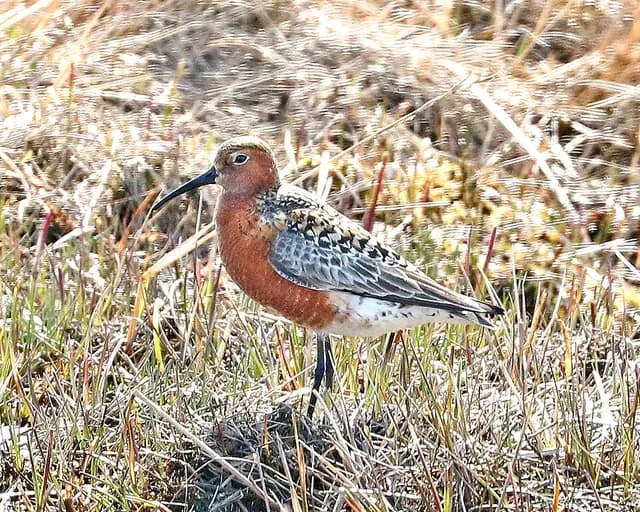
🐦Curlew Sandpiper
붉은갯도요(Curlew sandpiper, 학명: Calidris ferruginea)는 소형 섭금류이다. 장거리 철새로, 시베리아 북극의 고층습원과 해안 평야에서 6월부터 8월 혹은 9월까지 번식한다. 번식기가 끝나면 남쪽으로 이동하여 아프리카와 오세아니아, 유라시아 남부 해안에서 월동하며, 조간대 갯벌과 염전에서 생활한다. 성숙도와 계절에 따라 세 가지 주요 깃 변화를 보인다. 비번식기 깃은 갈색을 띤 회색의 윗면과 흰색의 아랫면을 보인다. 번식기 깃은 훨씬 인상적인데, 전체 앞면이 짙은 녹슨 색을 띠며 수컷은 더욱 강렬하다. 1년생 어린 새는 이동하거나 번식하지 않고, 번식기 동안 월동지에 머무른다. 간혹 번식기 깃으로 탈피하기도 하는데, 성조와 대체로 비슷하지만 가슴에 흰 반점이 있다. 비번식기 어린 새의 깃은 가슴의 크림색 줄무늬와 일부 날개 깃 가장자리의 옅은 색을 제외하면 성조와 비슷하여 비늘 모양처럼 보인다. 성조는 번식기에 붉은가슴도요나 붉은배지느러미발도요와 피상적으로 닮았고, 비번식기에는 민물도요나 덤불도요와 비슷하다. 어린 새는 크기가 더 크고 다리가 노란 목도리도요 어린 새나, 가슴에 줄무늬가 있는 민물도요 어린 새와 혼동될 수 있다. 붉은갯도요의 구애 행동은 복잡하며 여러 가지 독특한 과시가 포함된다. 그중 하나는 수컷이 땅에 가짜 둥지를 만들어 암컷에게 보여주는 것이다. 또 다른 것은 지저귀는 소리를 내며 우아하게 공중을 추격하는 행동이다. 세 번째로 수컷은 암컷 주위를 춤추듯 돌며 꼬리 깃과 엉덩이를 과시하는데, 이 행동은 가끔 짝짓기로 이어진다. 암컷은 대개 6월 말경에 한 알무더기의 알을 낳으며, 20일 후에 부화하여 14~20일이면 완전히 성장한다. 새끼는 태어날 때부터 조성성을 띤다. 붉은갯도요의 번식 성공률은 레밍 개체군과 관련이 있는데, 레밍이 많은 해에는 포식자들이 레밍을 사냥하기 때문이다. 이 새는 잡식성으로, 습지에서 큰 무리를 지어 게와 곤충을 비롯한 다양한 무척추동물을 먹는다. IUCN 적색 목록에서 취약종으로 분류되는데, 이는 토지 개발과 침입종인 갯쥐꼬리풀로 인해 월동지와 이동지의 서식지가 크게 감소했고, 기후변화가 번식 생산성을 낮추었기 때문이다. 붉은갯도요의 연간 생존율은 약 75~80%로 추정된다.
Text: Wikipedia, CC BY-SA 4.0.
IUCN Red List assessment, 2024.
- Body mass
- 0.06 kg
- Body length
- not recorded
- Shoulder height
- not recorded
- Top speed
- not recorded
- Bite force
- not recorded
- Maximum lifespan
- 20 years
Everything we know about the Curlew Sandpiper
Typical adult figures. Where a value is an estimate rather than a measurement, it says so.
Body mass0.06 kgAVONETOther figures ↓Hide ↑
Source: AVONET · v1.1 (Tobias et al. 2022) · CC BY 4.0
Figures vary
- 0.06 kgAnAgeAnAge build 15, 2023-07-03 (HAGR)data quality: acceptable
Tail length0.05 mAVONETDetails ↓Hide ↑
Source: AVONET · v1.1 (Tobias et al. 2022) · CC BY 4.0
Wing length0.13 mAVONETDetails ↓Hide ↑
Source: AVONET · v1.1 (Tobias et al. 2022) · CC BY 4.0
Beak length0.04 mAVONETDetails ↓Hide ↑
Source: AVONET · v1.1 (Tobias et al. 2022) · CC BY 4.0
Tarsus length0.03 mAVONETDetails ↓Hide ↑
Source: AVONET · v1.1 (Tobias et al. 2022) · CC BY 4.0
Maximum lifespan20 yearsAnAgeDetails ↓Hide ↑
data quality: acceptable
Source: AnAge · AnAge build 15, 2023-07-03 (HAGR) · CC BY 3.0
Trophic levelCarnivoreAVONETDetails ↓Hide ↑
Source: AVONET · v1.1 (Tobias et al. 2022) · CC BY 4.0
HabitatCoastalAVONETDetails ↓Hide ↑
Source: AVONET · v1.1 (Tobias et al. 2022) · CC BY 4.0
LifestyleTerrestrialAVONETDetails ↓Hide ↑
Source: AVONET · v1.1 (Tobias et al. 2022) · CC BY 4.0
Danger to humansharmlessSeaLifeBaseDetails ↓Hide ↑
Source: SeaLifeBase · v25.04 · CC BY-NC 4.0
Volume l0.1 LaverageDetails ↓Hide ↑
Body mass at ~1.0 kg/L, the density of vertebrate tissue.
average = a mean across sexes or species in a group.
Not recorded for Curlew Sandpiper yet: body length, shoulder height, top speed, bite force.
Family tree
- kingdomAnimalia
- ›phylumChordata
- ›classAves
- ›orderCharadriiformes
- ›familyScolopacidae
- ›genusCalidris
- ›speciesCalidris ferruginea
- superclassTetrapoda
- orderSauria
- classBirds · Aves
- familyScolopacidae
All 10 branches ↓Fewer branches ↑
- kingdomMetazoa
- phylumChordata
- subphylumCraniata
- subphylumVertebrata
- superclassGnathostomata
- superclassSarcopterygii
- superclassTetrapoda
- orderSauria
- classBirds · Aves
- familyScolopacidae
More about the Curlew Sandpiper


No videos of the Curlew Sandpiper yet.
We have 44,653 videos so far, and none of them features this animal yet.
All videos →Compare the Curlew Sandpiper
Pick a tool — the Curlew Sandpiper is already selected.
Compare every stat with any other animal.
Stand them on the same floor and see who's bigger.
How speed, brain and bite scale with body size. This animal isn't in the sample yet.
See where it sits in the tree of life.