
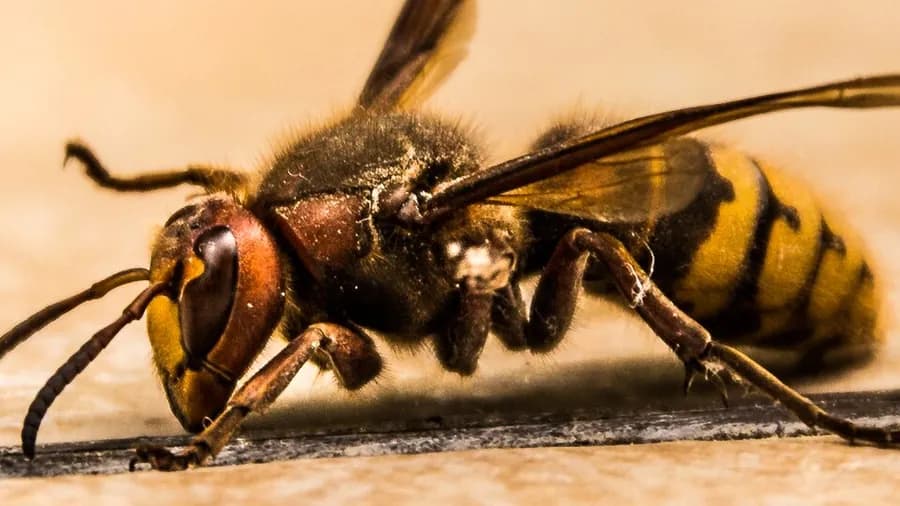
🐝European hornet
The European hornet is the largest eusocial wasp native to Europe. It is also the only true hornet found in North America, having been introduced to the United States and Canada from Europe as early as 1840. Vespines, such as V. crabro, are known for making intricate paper-like nests out of surrounding plant materials and other fibers. Unlike most other vespines, reproductive suppression involves worker policing instead of queen pheromone control, as was previously thought.
Text: Wikipedia, CC BY-SA 4.0.
The IUCN Red List has not assessed Vespa crabro yet.
- Body mass
- not recorded
- Body length
- not recorded
- Shoulder height
- not recorded
- Top speed
- not recorded
- Bite force
- not recorded
- Maximum lifespan
- not recorded
Everything we know about the European hornet
Typical adult figures. Where a value is an estimate rather than a measurement, it says so.
No measurements for European hornet yet.
Family tree
- kingdomAnimalia
- ›phylumArthropoda
- ›classInsecta
- ›orderHymenoptera
- ›familyVespidae
- ›genusVespa
- ›speciesVespa crabro
- classInsects · Insecta
- orderAnts, bees & wasps · Hymenoptera
- subfamilyVespinae
- genusVespa
All 10 branches ↓Fewer branches ↑
- kingdomMetazoa
- phylumArthropoda
- subphylumHexapoda
- classInsects · Insecta
- subclassPterygota
- orderAnts, bees & wasps · Hymenoptera
- superfamilyVespoidea
- familyVespidae
- subfamilyVespinae
- genusVespa
More about the European hornet


No videos of the European hornet yet.
We have 44,653 videos so far, and none of them features this animal yet.
All videos →Compare the European hornet
Pick a tool — the European hornet is already selected.
Compare every stat with any other animal.
Stand them on the same floor and see who's bigger.
How speed, brain and bite scale with body size. This animal isn't in the sample yet.
See where it sits in the tree of life.