
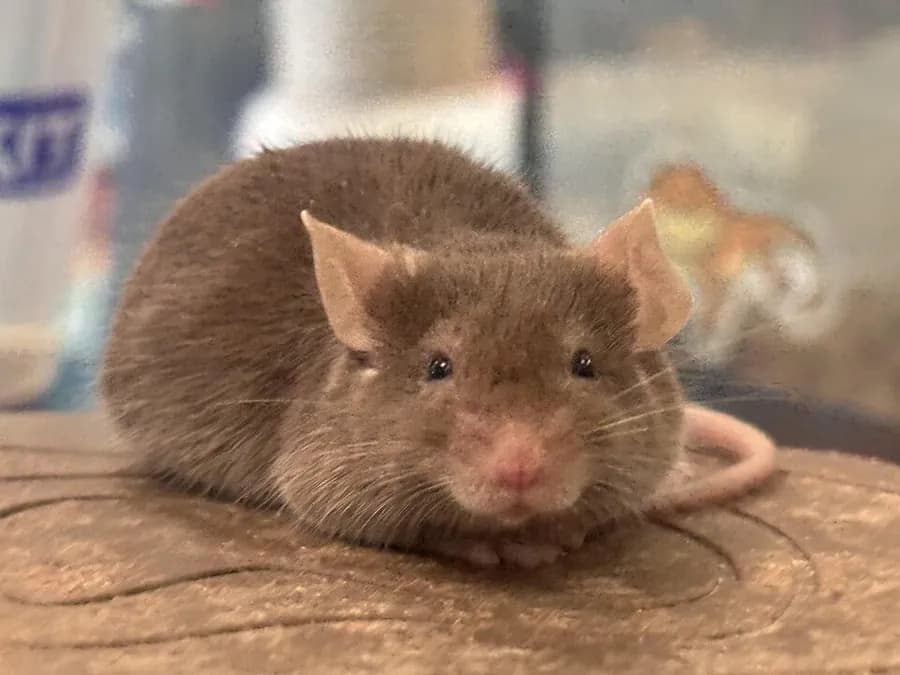
🐭House mouse
A házi egér vagy laboratóriumi egér (Mus musculus) rágcsálóféle, a biológia és az orvostudomány igen fontos modellszervezete. Úgy tartják, hogy ez a második legnagyobb egyedszámú emlősfaj az ember után. Mindig az emberekhez közel lakik, akikkel kommenzalista, azaz asztalközösségi kapcsolatot tart fenn. Ezt az emlőst használják leggyakrabban a laboratóriumi kísérletekben és rengeteg különböző transzgenikus fajtája létezik, melyeken emberi genetikai betegségeket modelleznek. Gerinces állat, elsősorban növényevő (magfélék), rendkívül szapora, 6 hetenként 8-10 utódot képes világra hozni egy egérpár. Nemének a típusfaja.
Text: Wikipedia, CC BY-SA 4.0.
IUCN Red List assessment, 2021.
- Body mass
- 0.02 kg
- Body length
- 0.1 m
- Shoulder height
- not recorded
- Top speed
- not recorded
- Bite force
- not recorded
- Maximum lifespan
- 6 years
Everything we know about the House mouse
Typical adult figures. Where a value is an estimate rather than a measurement, it says so.
Body mass0.02 kgCOMBINEOther figures ↓Hide ↑
Source: COMBINE · v1 (Soria et al. 2021) · CC BY 4.0
Figures vary
- 0.02 kgAnAgeAnAge build 15, 2023-07-03 (HAGR)data quality: high
Body length0.1 mCOMBINEDetails ↓Hide ↑
Source: COMBINE · v1 (Soria et al. 2021) · CC BY 4.0
Brain mass0.44 gCOMBINEDetails ↓Hide ↑
Source: COMBINE · v1 (Soria et al. 2021) · CC BY 4.0
Maximum lifespan6 yearsCOMBINEOther figures ↓Hide ↑
Source: COMBINE · v1 (Soria et al. 2021) · CC BY 4.0
Figures vary
- 4 yearsAnAgeAnAge build 15, 2023-07-03 (HAGR)data quality: high
Generation length1.72 yearsCOMBINEDetails ↓Hide ↑
Source: COMBINE · v1 (Soria et al. 2021) · CC BY 4.0
Age at maturity65 daysCOMBINEDetails ↓Hide ↑
Source: COMBINE · v1 (Soria et al. 2021) · CC BY 4.0
Gestation20 daysCOMBINEOther figures ↓Hide ↑
Source: COMBINE · v1 (Soria et al. 2021) · CC BY 4.0
Figures vary
- 19 daysAnAgeAnAge build 15, 2023-07-03 (HAGR)data quality: high
Litter sizeabout 6COMBINEOther figures ↓Hide ↑
Source: COMBINE · v1 (Soria et al. 2021) · CC BY 4.0
Figures vary
- 7AnAgeAnAge build 15, 2023-07-03 (HAGR)data quality: high
Trophic levelOmnivoreCOMBINEDetails ↓Hide ↑
Source: COMBINE · v1 (Soria et al. 2021) · CC BY 4.0
Activity cycleNocturnalCOMBINEDetails ↓Hide ↑
Source: COMBINE · v1 (Soria et al. 2021) · CC BY 4.0
Home range0 km²COMBINEDetails ↓Hide ↑
Source: COMBINE · v1 (Soria et al. 2021) · CC BY 4.0
Population density7,207 per km²COMBINEDetails ↓Hide ↑
Source: COMBINE · v1 (Soria et al. 2021) · CC BY 4.0
Volume l0 LaverageDetails ↓Hide ↑
Body mass at ~1.0 kg/L, the density of vertebrate tissue.
average = a mean across sexes or species in a group.
Not recorded for House mouse yet: shoulder height, top speed, bite force.
Family tree
- kingdomAnimalia
- ›phylumChordata
- ›classMammalia
- ›orderRodentia
- ›familyMuridae
- ›genusMus
- ›speciesMus musculus
- classMammals · Mammalia
- orderRodents · Rodentia
- suborderMyomorpha
- familyMuridae
All 13 branches ↓Fewer branches ↑
- kingdomMetazoa
- phylumChordata
- subphylumCraniata
- subphylumVertebrata
- superclassGnathostomata
- superclassSarcopterygii
- superclassTetrapoda
- classMammals · Mammalia
- subclassTheria
- superorderEuarchontoglires
- orderRodents · Rodentia
- suborderMyomorpha
- familyMuridae
More about the House mouse
Kamerára vett állatok
Igazi felvételek az oldal állatairól — ahogy vadásznak, ahogy harcolnak, és ahogy egyszerűen csak élnek.
Compare the House mouse
Pick a tool — the House mouse is already selected.
Compare every stat with any other animal.
Stand them on the same floor and see who's bigger.
Does it punch above its weight? Its stats against what body size predicts.
See where it sits in the tree of life.