
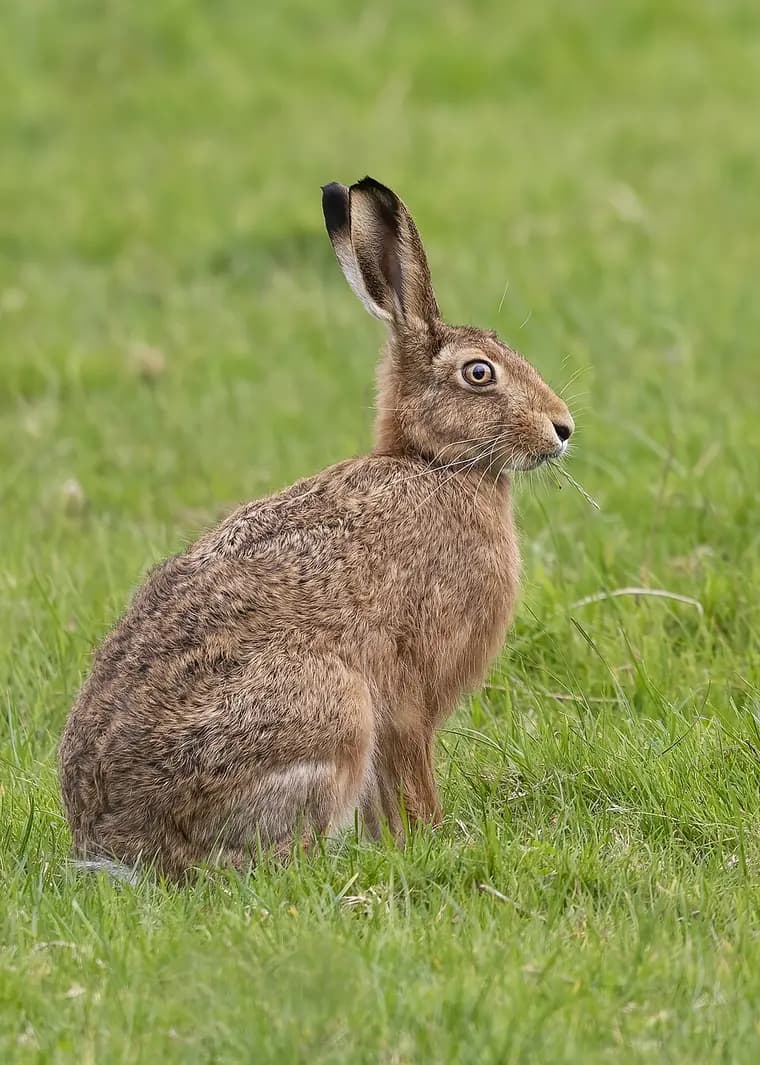
🐇European hare
ארנבת אירופית או ארנבת מצויה (שם מדעי: Lepus europaeus) היא מין של ארנבת שבמקור חיה בטבע באירופה ובכמה אזורים באסיה. היא אחת ממיני הארנבות הגדולים ביותר בעולם ומותאמת לאזור פתוח וממוזג. ארנבות אירופאיות הן אוכלות-צמחים וניזונות בעיקר מדשא ומעשבים, ומשלימות את תזונתם בענפים, ניצנים, קליפות וגידולי שדה, במיוחד בחורף. בין הטורפים הטבעיים שלהן נמנים שועלים מצויים ועופות דורסים גדולים. הן מסתמכות על ריצה במהירות גבוהה כדי להימלט מטריפה והן בעלות גפיים ארוכות וחזקות ונחיריים גדולים. ארנבות אירופאיות, שבדרך כלל פועלות בלילה וביישניות, משנות את התנהגותן באביב, כאשר ניתן לראותן באור יום רודפות זו אחר זו בשדות. במהלך האביב הן לפעמים אף מכות זו את זו בכפותיהן. זו לא רק תחרות בין זכרים: נקבות עשויות גם להכות זכרים, בין אם כדי להראות שהן לא מוכנות להזדווג איתם ובין אם ברצונן לבחון את נחישותם. הנקבה מקננת בשקע על פני הקרקע ולא במאורה, והצאצאים פעילים מייד עם היוולדם. המלטה של ארנבת אירופית עשויה לכלול שלושה או ארבעה גורים, בעוד שנקבה יכולה להמליט שלוש פעמים בשנה, כאשר ארנבות אירופאיות חיות עד 12 שנים. עונת הרבייה נמשכת מינואר עד אוגוסט. מצב השימור שלה מוגדר על ידי ה-IUCN כ"ללא חשש", עקב תפוצתה הרחבה והעובדה שהיא מצויה בשפע יחסי. עם זאת, אוכלוסיותיה נמצאות בירידה באירופה הקונטיננטלית מאז שנות ה-60 של המאה ה-20, לפחות בחלקן עקב שינויים בשיטות החקלאות. הארנבת ניצודה ברחבי אירופה במשך מאות שנים, כאשר יותר מחמישה מיליון ארנבות נורו מדי שנה; בבריטניה היא ניצודה באופן מסורתי באמצעות כלבים (דוגמת ביגל), אך אלה אינם חוקיים בימינו (אם כי ציד בלתי-חוקי מסוג זה עודנו נמשך). בתרבויות מסוימות, הארנבת האירופית היא סמל לפוריות ולרבייה והתנהגות החיזור שלה באביב היוותה השראה לביטוי האנגלי "משוגע כמו ארנב מרץ".
Text: Wikipedia, CC BY-SA 4.0.
IUCN Red List assessment, 2019.
- Body mass
- 3.67 kg
- Body length
- 0.61 m
- Shoulder height
- not recorded
- Top speed
- not recorded
- Bite force
- not recorded
- Maximum lifespan
- 12 years
Everything we know about the European hare
Typical adult figures. Where a value is an estimate rather than a measurement, it says so.
Body mass3.67 kgCOMBINEOther figures ↓Hide ↑
Source: COMBINE · v1 (Soria et al. 2021) · CC BY 4.0
Figures vary
- 4.17 kgAnAgeAnAge build 15, 2023-07-03 (HAGR)data quality: acceptable
Body length0.61 mCOMBINEDetails ↓Hide ↑
Source: COMBINE · v1 (Soria et al. 2021) · CC BY 4.0
Brain mass14 gCOMBINEDetails ↓Hide ↑
Source: COMBINE · v1 (Soria et al. 2021) · CC BY 4.0
Maximum lifespan12 yearsCOMBINEOther figures ↓Hide ↑
Source: COMBINE · v1 (Soria et al. 2021) · CC BY 4.0
Figures vary
- 11 yearsAnAgeAnAge build 15, 2023-07-03 (HAGR)data quality: acceptable
Generation length2 yearsCOMBINEDetails ↓Hide ↑
Source: COMBINE · v1 (Soria et al. 2021) · CC BY 4.0
Age at maturity211 daysCOMBINEDetails ↓Hide ↑
Source: COMBINE · v1 (Soria et al. 2021) · CC BY 4.0
Gestation42 daysCOMBINEOther figures ↓Hide ↑
Source: COMBINE · v1 (Soria et al. 2021) · CC BY 4.0
Figures vary
- 42 daysAnAgeAnAge build 15, 2023-07-03 (HAGR)data quality: acceptable
Litter sizeabout 2COMBINEOther figures ↓Hide ↑
Source: COMBINE · v1 (Soria et al. 2021) · CC BY 4.0
Figures vary
- 2AnAgeAnAge build 15, 2023-07-03 (HAGR)data quality: acceptable
Trophic levelHerbivoreCOMBINEDetails ↓Hide ↑
Source: COMBINE · v1 (Soria et al. 2021) · CC BY 4.0
Activity cycleNocturnalCOMBINEDetails ↓Hide ↑
Source: COMBINE · v1 (Soria et al. 2021) · CC BY 4.0
Home range0.31 km²COMBINEDetails ↓Hide ↑
Source: COMBINE · v1 (Soria et al. 2021) · CC BY 4.0
Population density47 per km²COMBINEDetails ↓Hide ↑
Source: COMBINE · v1 (Soria et al. 2021) · CC BY 4.0
Volume l3.7 LaverageDetails ↓Hide ↑
Body mass at ~1.0 kg/L, the density of vertebrate tissue.
average = a mean across sexes or species in a group.
Not recorded for European hare yet: shoulder height, top speed, bite force.
Family tree
- kingdomAnimalia
- ›phylumChordata
- ›classMammalia
- ›orderLagomorpha
- ›familyLeporidae
- ›genusLepus
- ›speciesLepus europaeus
- classMammals · Mammalia
- orderRabbits & hares · Lagomorpha
- familyLeporidae
- genusLepus
All 13 branches ↓Fewer branches ↑
- kingdomMetazoa
- phylumChordata
- subphylumCraniata
- subphylumVertebrata
- superclassGnathostomata
- superclassSarcopterygii
- superclassTetrapoda
- classMammals · Mammalia
- subclassTheria
- superorderEuarchontoglires
- orderRabbits & hares · Lagomorpha
- familyLeporidae
- genusLepus
More about the European hare


No videos of the European hare yet.
We have 44,653 videos so far, and none of them features this animal yet.
All videos →Compare the European hare
Pick a tool — the European hare is already selected.
Compare every stat with any other animal.
Stand them on the same floor and see who's bigger.
How speed, brain and bite scale with body size. This animal isn't in the sample yet.
See where it sits in the tree of life.