
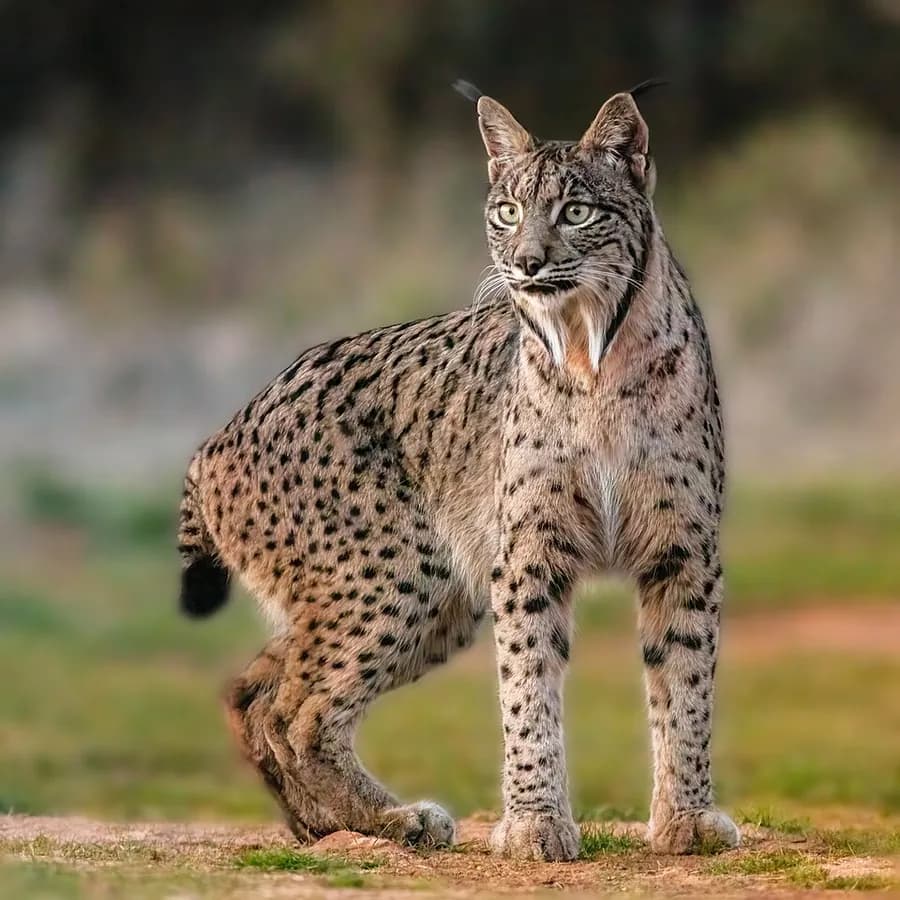
🐈Iberian lynx
Rys iberský (dříve Felis pardina, dnes Lynx pardinus nebo Lynx pardina), též rys pardálový nebo rys španělský, je kočkovitá šelma vyskytující se endemicky v jihozápadní části Pyrenejského poloostrova. Je to ohrožený druh, počátkem 21. století byl několik let i kriticky ohrožený. V roce 2016 žilo přibližně 400 jedinců ve čtyřech španělských populacích v oblastech Doñana, Sierra Morena, Montes de Toledo, Valley Matachel a v portugalském Vale do Guadiana. Oproti roku 2014 to byl nárůst o téměř 100 kusů. V roce 2017 populace čítala asi 475–606 jedinců, v roce 2020 už 855 jedinců a díky dosavadní systematické ochraně a zřízeným chovným stanicím, které vrací rysy do přírody, aktuálně vzrostla populace na více než 2 000 jedinců.
Text: Wikipedia, CC BY-SA 4.0.
IUCN Red List assessment, 2024.
- Body mass
- 10 kg
- Body length
- 1.03 m
- Shoulder height
- not recorded
- Top speed
- not recorded
- Bite force
- not recorded
- Maximum lifespan
- 13 years
Everything we know about the Iberian lynx
Typical adult figures. Where a value is an estimate rather than a measurement, it says so.
Body mass10 kgCOMBINEOther figures ↓Hide ↑
Source: COMBINE · v1 (Soria et al. 2021) · CC BY 4.0
Figures vary
- 11 kgAnAgeAnAge build 15, 2023-07-03 (HAGR)data quality: low
Body length1.03 mCOMBINEDetails ↓Hide ↑
Source: COMBINE · v1 (Soria et al. 2021) · CC BY 4.0
Maximum lifespan13 yearsCOMBINEDetails ↓Hide ↑
Source: COMBINE · v1 (Soria et al. 2021) · CC BY 4.0
Generation length4.32 yearsCOMBINEDetails ↓Hide ↑
Source: COMBINE · v1 (Soria et al. 2021) · CC BY 4.0
Gestation68 daysCOMBINEOther figures ↓Hide ↑
Source: COMBINE · v1 (Soria et al. 2021) · CC BY 4.0
Figures vary
- 68 daysAnAgeAnAge build 15, 2023-07-03 (HAGR)data quality: low
Litter sizeabout 3COMBINEOther figures ↓Hide ↑
Source: COMBINE · v1 (Soria et al. 2021) · CC BY 4.0
Figures vary
- 2.5AnAgeAnAge build 15, 2023-07-03 (HAGR)data quality: low
Trophic levelCarnivoreCOMBINEDetails ↓Hide ↑
Source: COMBINE · v1 (Soria et al. 2021) · CC BY 4.0
Activity cycleNocturnalCOMBINEDetails ↓Hide ↑
Source: COMBINE · v1 (Soria et al. 2021) · CC BY 4.0
Home range7.19 km²COMBINEDetails ↓Hide ↑
Source: COMBINE · v1 (Soria et al. 2021) · CC BY 4.0
Population density0.32 per km²COMBINEDetails ↓Hide ↑
Source: COMBINE · v1 (Soria et al. 2021) · CC BY 4.0
Volume l10 LaverageDetails ↓Hide ↑
Body mass at ~1.0 kg/L, the density of vertebrate tissue.
average = a mean across sexes or species in a group.
Not recorded for Iberian lynx yet: shoulder height, top speed, bite force.
Family tree
- kingdomAnimalia
- ›phylumChordata
- ›classMammalia
- ›orderCarnivora
- ›familyFelidae
- ›genusLynx
- ›speciesLynx pardinus
- classMammals · Mammalia
- orderCarnivorans · Carnivora
- familyFelidae
- genusLynx
All 14 branches ↓Fewer branches ↑
- kingdomMetazoa
- phylumChordata
- subphylumCraniata
- subphylumVertebrata
- superclassGnathostomata
- superclassSarcopterygii
- superclassTetrapoda
- classMammals · Mammalia
- subclassTheria
- superorderLaurasiatheria
- orderCarnivorans · Carnivora
- suborderFeliformia
- familyFelidae
- genusLynx
More about the Iberian lynx


Zvířata zachycená kamerou
Skutečné záběry zvířat z tohoto webu – jak loví, jak se perou a jak si prostě žijí.
Compare the Iberian lynx
Pick a tool — the Iberian lynx is already selected.
Compare every stat with any other animal.
Stand them on the same floor and see who's bigger.
How speed, brain and bite scale with body size. This animal isn't in the sample yet.
See where it sits in the tree of life.