
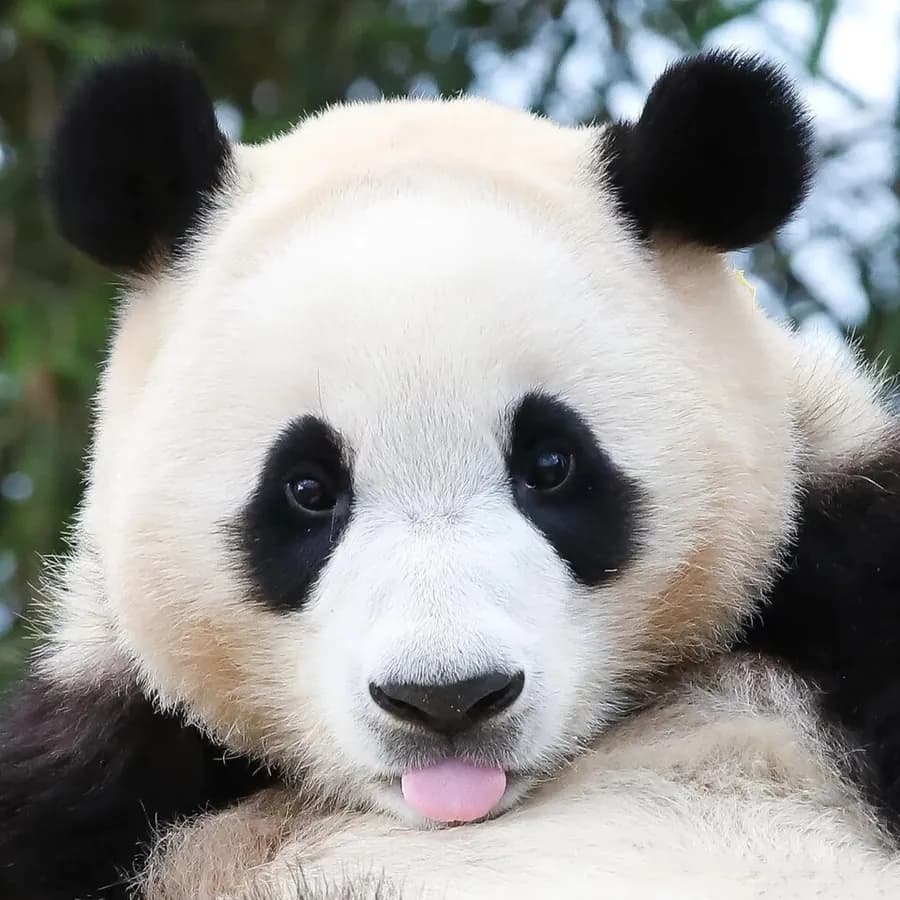
🐼Giant panda
大熊猫(學名:Ailuropoda melanoleuca)屬於食肉目熊科,是中國的特有種,也是大熊猫亚科的仅存物种。其体型肥硕,皮毛厚韧,头圆尾短,通体多呈黑白两色。大熊猫栖息于海拔2000—3500米的森林中,主要以竹类植物为食,是昼夜兼行的独栖动物。其每日的活动时间中,约有一半用于进食,另一半则用于睡眠。 大熊猫分布于中国四川省、陕西省及甘肃省南部的山区,现存约2700只(截止2025年)。尽管IUCN于2016年末将大熊猫的受威胁程度从“濒危”降为“易危”,但其仍被视为生态保护的标志性物种,被尊为“中国国宝”与“活化石”,更被世界自然基金会称作“世上最具代表性和可爱的动物”、列入“全球优先保护的13个旗舰物种”之一。
Text: Wikipedia, CC BY-SA 4.0.
IUCN Red List assessment, 2016.
- Body mass
- 118 kg
- Body length
- 1.42 m
- Shoulder height
- 0.68 m
- Top speed
- not recorded
- Bite force
- not recorded
- Maximum lifespan
- 37 years
Everything we know about the Giant panda
Typical adult figures. Where a value is an estimate rather than a measurement, it says so.
Body mass118 kgCOMBINEOther figures ↓Hide ↑
Source: COMBINE · v1 (Soria et al. 2021) · CC BY 4.0
Figures vary
- 118 kgAnAgeAnAge build 15, 2023-07-03 (HAGR)data quality: acceptable
Body length1.42 mCOMBINEDetails ↓Hide ↑
Source: COMBINE · v1 (Soria et al. 2021) · CC BY 4.0
Shoulder height0.68 m0.65–0.7 m · typical rangeat the shoulderDetails ↓Hide ↑
"The shoulder height is 65-70 cm." Value is the midpoint of the stated range; measurement method beyond "shoulder height" not stated.
Source: Animal Diversity Web (Univ. Michigan), Ailuropoda melanoleuca account, https://animaldiversity.org/accounts/Ailuropoda_melanoleuca/ · see citation
Brain mass243 gCOMBINEDetails ↓Hide ↑
Source: COMBINE · v1 (Soria et al. 2021) · CC BY 4.0
Maximum lifespan37 yearsCOMBINEOther figures ↓Hide ↑
Source: COMBINE · v1 (Soria et al. 2021) · CC BY 4.0
Figures vary
- 37 yearsAnAgeAnAge build 15, 2023-07-03 (HAGR)data quality: acceptable
Generation length14 yearsCOMBINEDetails ↓Hide ↑
Source: COMBINE · v1 (Soria et al. 2021) · CC BY 4.0
Age at maturity6.6 yearsCOMBINEDetails ↓Hide ↑
Source: COMBINE · v1 (Soria et al. 2021) · CC BY 4.0
Gestation131 daysCOMBINEOther figures ↓Hide ↑
Source: COMBINE · v1 (Soria et al. 2021) · CC BY 4.0
Figures vary
- 48 daysAnAgeAnAge build 15, 2023-07-03 (HAGR)data quality: acceptable
Litter sizeabout 2COMBINEOther figures ↓Hide ↑
Source: COMBINE · v1 (Soria et al. 2021) · CC BY 4.0
Figures vary
- 1.5AnAgeAnAge build 15, 2023-07-03 (HAGR)data quality: acceptable
Trophic levelHerbivoreCOMBINEDetails ↓Hide ↑
Source: COMBINE · v1 (Soria et al. 2021) · CC BY 4.0
Activity cycleCrepuscular / mixedCOMBINEDetails ↓Hide ↑
Source: COMBINE · v1 (Soria et al. 2021) · CC BY 4.0
Home range3.55 km²COMBINEDetails ↓Hide ↑
Source: COMBINE · v1 (Soria et al. 2021) · CC BY 4.0
Population density0.18 per km²COMBINEDetails ↓Hide ↑
Source: COMBINE · v1 (Soria et al. 2021) · CC BY 4.0
Volume l118 LaverageDetails ↓Hide ↑
Body mass at ~1.0 kg/L, the density of vertebrate tissue.
average = a mean across sexes or species in a group.
Not recorded for Giant panda yet: top speed, bite force.
Family tree
- kingdomAnimalia
- ›phylumChordata
- ›classMammalia
- ›orderCarnivora
- ›familyUrsidae
- ›genusAiluropoda
- ›speciesAiluropoda melanoleuca
- classMammals · Mammalia
- orderCarnivorans · Carnivora
- familyUrsidae
- genusAiluropoda
All 14 branches ↓Fewer branches ↑
- kingdomMetazoa
- phylumChordata
- subphylumCraniata
- subphylumVertebrata
- superclassGnathostomata
- superclassSarcopterygii
- superclassTetrapoda
- classMammals · Mammalia
- subclassTheria
- superorderLaurasiatheria
- orderCarnivorans · Carnivora
- suborderCaniformia
- familyUrsidae
- genusAiluropoda
More about the Giant panda


镜头下的动物
站内动物的实拍影像——捕猎、打斗,还有各自过日子的样子。
Compare the Giant panda
Pick a tool — the Giant panda is already selected.
Compare every stat with any other animal.
Stand them on the same floor and see who's bigger.
How speed, brain and bite scale with body size. This animal isn't in the sample yet.
See where it sits in the tree of life.