
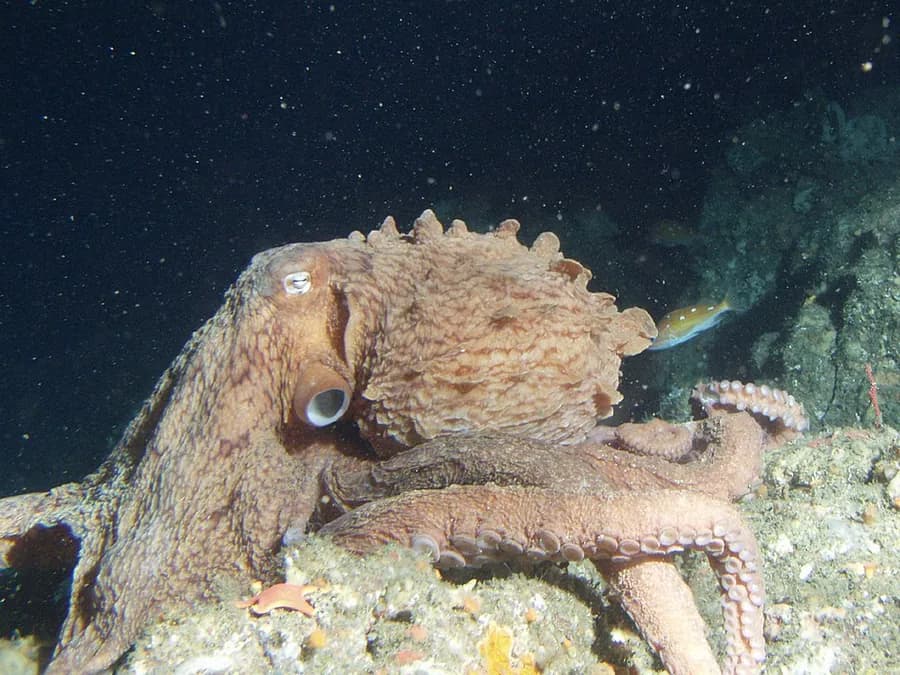
 🐙
Photo: NOAA/R. N. Lea · Public domain
🐙Giant Pacific octopus
北太平洋巨型章魚(學名:Enteroctopus dofleini),又名北太平洋巨人章魚,是一種巨型的章魚。它們分佈在北太平洋海岸水深達65米的地方,也可以走到較淺或較深水的地方居住。因曾發現重達71公斤的個體,故有指它們是最大的章魚。另外卻有指七胳膊章魚才是最大的章魚,因曾發現重達61公斤的屍體,估計活體可以重達75公斤。不過仍有很多紀錄指北太平洋巨型章魚可能是最巨大的。
Text: Wikipedia, CC BY-SA 4.0.
IUCN Red List assessment, 2018.
- Body mass
- 272 kg
- Body length
- 3 m
- Shoulder height
- not recorded
- Top speed
- not recorded
- Bite force
- not recorded
- Maximum lifespan
- not recorded
Everything we know about the Giant Pacific octopus
Typical adult figures. Where a value is an estimate rather than a measurement, it says so.
Body mass272 kgmaximum recordedSeaLifeBaseDetails ↓Hide ↑
SeaLifeBase populates Weight independently of Length; the two are not guaranteed to describe the same individual. Verify before publishing.
Source: SeaLifeBase · v25.04 · CC BY-NC 4.0
Body length3 mmaximum recorded, total lengthSeaLifeBaseDetails ↓Hide ↑
Source: SeaLifeBase · v25.04 · CC BY-NC 4.0
Volume l272 LaverageDetails ↓Hide ↑
Body mass at ~1.0 kg/L, the density of vertebrate tissue.
average = a mean across sexes or species in a group.
Not recorded for Giant Pacific octopus yet: shoulder height, top speed, bite force, maximum lifespan.
Family tree
- kingdomAnimalia
- ›phylumMollusca
- ›classCephalopoda
- ›orderOctopoda
- ›familyEnteroctopodidae
- ›genusEnteroctopus
- ›speciesEnteroctopus dofleini
- phylumMolluscs · Mollusca
- classOctopuses & squid · Cephalopoda
- suborderIncirrata
- superfamilyOctopodoidea
All 8 branches ↓Fewer branches ↑
- kingdomMetazoa
- phylumMolluscs · Mollusca
- classOctopuses & squid · Cephalopoda
- subclassColeoidea
- superorderOctopodiformes
- orderOctopoda
- suborderIncirrata
- superfamilyOctopodoidea
More about the Giant Pacific octopus


镜头下的动物
站内动物的实拍影像——捕猎、打斗,还有各自过日子的样子。
Compare the Giant Pacific octopus
Pick a tool — the Giant Pacific octopus is already selected.
Compare every stat with any other animal.
Stand them on the same floor and see who's bigger.
Does it punch above its weight? Its stats against what body size predicts.
See where it sits in the tree of life.