
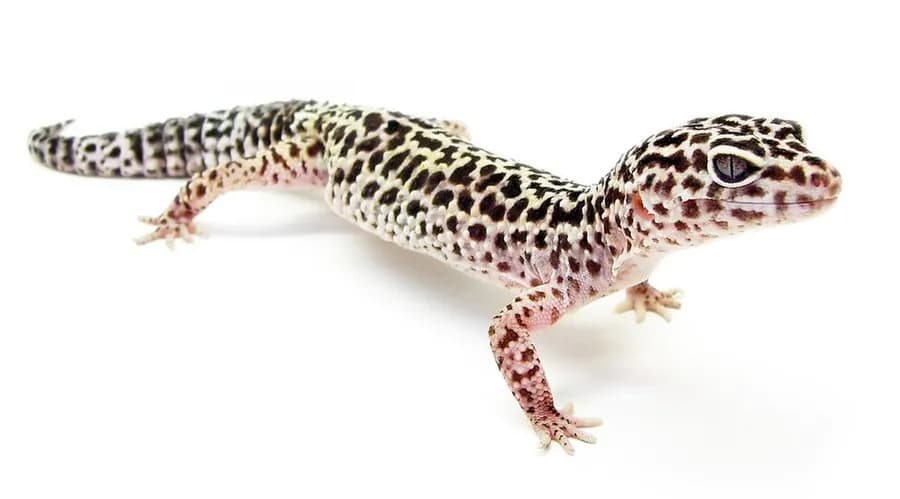
🦎Leopard gecko
O Eublepharis macularius, conhecido vulgarmente por Lagartixa-leopardo, osga-leopardo, ou geco-leopardo (ou leopard gecko, em inglês) é um réptil pertencente à família Gekkonidae. Esse réptil, originário do Oriente Médio (Paquistão, Afeganistão e Irã) e da Índia mede aproximadamente 22 centímetros, podendo alcançar os 27 centímetros e alimenta-se de insetos, como baratas , grilos e tenébrios. Apresenta manchas amarelas, roxas, azuis e pretas na pele, fazendo com que cada membro da espécie seja único. Este lagarto terrestre encontra-se normalmente nas áreas desérticas e montanhosas do Paquistão, oeste da Índia e Afeganistão. Tem entre 1 e 2 ovos por cada postura (Durante o período de reprodução, uma fêmea pode realizar até 5 posturas), acabando por eclodir ao fim de 42 a 84 dias de incubação. Tem um período de vida estimado de aproximadamente 15 anos na natura, já em cativeiro pode passar dos 15, atingindo até 20 anos.
Text: Wikipedia, CC BY-SA 4.0.
IUCN Red List assessment, 2021.
- Body mass
- 0.04 kg
- Body length
- not recorded
- Shoulder height
- not recorded
- Top speed
- not recorded
- Bite force
- not recorded
- Maximum lifespan
- 29 years
Everything we know about the Leopard gecko
Typical adult figures. Where a value is an estimate rather than a measurement, it says so.
Body mass0.04 kgrecord 0.11 kg · ReptTraitsAnAgeDetails ↓Hide ↑
data quality: acceptable
Record: largest individual on record
Source: AnAge · AnAge build 15, 2023-07-03 (HAGR) · CC BY 3.0
Maximum lifespan29 yearsrecord 29 years · ReptTraitsAnAgeDetails ↓Hide ↑
data quality: acceptable
Record: largest individual on record
Source: AnAge · AnAge build 15, 2023-07-03 (HAGR) · CC BY 3.0
Gestation55 daysAnAgeDetails ↓Hide ↑
data quality: acceptable
Source: AnAge · AnAge build 15, 2023-07-03 (HAGR) · CC BY 3.0
Litter sizeabout 2AnAgeDetails ↓Hide ↑
data quality: acceptable
Source: AnAge · AnAge build 15, 2023-07-03 (HAGR) · CC BY 3.0
DietCarnivorousReptTraitsDetails ↓Hide ↑
Source: ReptTraits · v1.2 (Oskyrko et al. 2024) · CC BY 4.0
Activity cycleNocturnalReptTraitsDetails ↓Hide ↑
Source: ReptTraits · v1.2 (Oskyrko et al. 2024) · CC BY 4.0
Foraging modeAMBReptTraitsDetails ↓Hide ↑
Source: ReptTraits · v1.2 (Oskyrko et al. 2024) · CC BY 4.0
VenomousNoReptTraitsDetails ↓Hide ↑
Source: ReptTraits · v1.2 (Oskyrko et al. 2024) · CC BY 4.0
Snout–vent length0.17 mmaximum recordedReptTraitsOther figures ↓Hide ↑
Source: ReptTraits · v1.2 (Oskyrko et al. 2024) · CC BY 4.0
By sex
- Female0.12 mReptTraitsv1.2 (Oskyrko et al. 2024)
Volume l0 LaverageDetails ↓Hide ↑
Body mass at ~1.0 kg/L, the density of vertebrate tissue.
average = a mean across sexes or species in a group.
Not recorded for Leopard gecko yet: body length, shoulder height, top speed, bite force.
Family tree
- kingdomAnimalia
- ›phylumChordata
- ›classSquamata
- ›familyEublepharidae
- ›genusEublepharis
- ›speciesEublepharis macularius
- superorderLepidosauria
- orderLizards & snakes · Squamata
- infraorderGekkota
- genusEublepharis
All 12 branches ↓Fewer branches ↑
- kingdomMetazoa
- phylumChordata
- subphylumCraniata
- subphylumVertebrata
- superclassGnathostomata
- superclassSarcopterygii
- superclassTetrapoda
- orderSauria
- superorderLepidosauria
- orderLizards & snakes · Squamata
- infraorderGekkota
- genusEublepharis
More about the Leopard gecko
Animais flagrados pela câmera
Imagens reais dos animais deste site — caçando, brigando e levando a vida.
Compare the Leopard gecko
Pick a tool — the Leopard gecko is already selected.
Compare every stat with any other animal.
Stand them on the same floor and see who's bigger.
How speed, brain and bite scale with body size. This animal isn't in the sample yet.
See where it sits in the tree of life.