
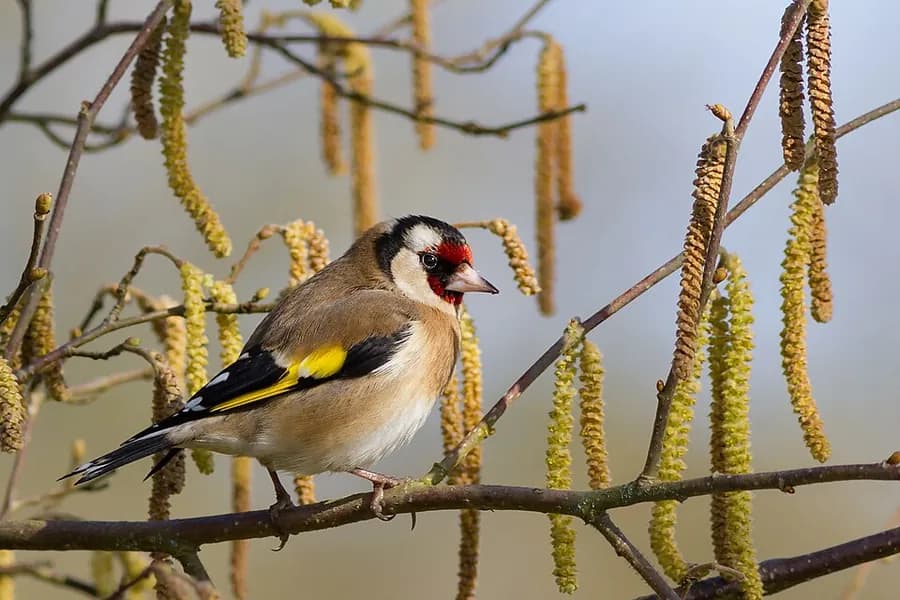
🐦European Goldfinch
Carduelis carduelis Linnaeus, 1758, conhecido pelo nome comum de pintassilgo, é uma pequena ave fringilídea, comum em toda a Europa, mais abundante nas regiões central e meridional do continente. É uma residente habitual nas zonas temperadas, mas as populações de latitudes mais altas migram para sul durante o inverno. A espécie tem distribuição natural centrada na Europa Ocidental, mas estendendo-se até à Sibéria central, ao sudoeste da Ásia e ao norte de África, estando naturalizada em algumas regiões da América do Sul, Estados Unidos da America, da Austrália, da Nova Zelândia e de algumas ilhas da Oceânia onde foi introduzida. Alimenta-se de sementes semi-maduros e maduros de plantas perenes e anuais, incluindo gramíneas e árvores, podendo também recorrer à captura de insectos, particularmente durante a fase reprodutiva. Na Europa Ocidental a espécie era um símbolo da resistência, da fertilidade e da perseverança, sendo, pelo seu amor pelos cardos, utilizada como símbolo cristão da Paixão e da morte sacrificial de Jesus Cristo.
Text: Wikipedia, CC BY-SA 4.0.
IUCN Red List assessment, 2019.
- Body mass
- 0.02 kg
- Body length
- not recorded
- Shoulder height
- not recorded
- Top speed
- not recorded
- Bite force
- not recorded
- Maximum lifespan
- 27 years
Everything we know about the European Goldfinch
Typical adult figures. Where a value is an estimate rather than a measurement, it says so.
Body mass0.02 kgAVONETOther figures ↓Hide ↑
Source: AVONET · v1.1 (Tobias et al. 2022) · CC BY 4.0
Figures vary
- 0.02 kgAnAgeAnAge build 15, 2023-07-03 (HAGR)data quality: acceptable
Tail length0.05 mAVONETDetails ↓Hide ↑
Source: AVONET · v1.1 (Tobias et al. 2022) · CC BY 4.0
Wing length0.08 mAVONETDetails ↓Hide ↑
Source: AVONET · v1.1 (Tobias et al. 2022) · CC BY 4.0
Beak length0.02 mAVONETDetails ↓Hide ↑
Source: AVONET · v1.1 (Tobias et al. 2022) · CC BY 4.0
Tarsus length0.01 mAVONETDetails ↓Hide ↑
Source: AVONET · v1.1 (Tobias et al. 2022) · CC BY 4.0
Maximum lifespan27 yearsAnAgeDetails ↓Hide ↑
data quality: acceptable
Source: AnAge · AnAge build 15, 2023-07-03 (HAGR) · CC BY 3.0
Trophic levelHerbivoreAVONETDetails ↓Hide ↑
Source: AVONET · v1.1 (Tobias et al. 2022) · CC BY 4.0
HabitatWoodlandAVONETDetails ↓Hide ↑
Source: AVONET · v1.1 (Tobias et al. 2022) · CC BY 4.0
LifestyleInsessorialAVONETDetails ↓Hide ↑
Source: AVONET · v1.1 (Tobias et al. 2022) · CC BY 4.0
Volume l0 LaverageDetails ↓Hide ↑
Body mass at ~1.0 kg/L, the density of vertebrate tissue.
average = a mean across sexes or species in a group.
Not recorded for European Goldfinch yet: body length, shoulder height, top speed, bite force.
Family tree
- kingdomAnimalia
- ›phylumChordata
- ›classAves
- ›orderPasseriformes
- ›familyFringillidae
- ›genusCarduelis
- ›speciesCarduelis carduelis
- orderSauria
- classBirds · Aves
- orderPerching birds · Passeriformes
- genusCarduelis
All 11 branches ↓Fewer branches ↑
- kingdomMetazoa
- phylumChordata
- subphylumCraniata
- subphylumVertebrata
- superclassGnathostomata
- superclassSarcopterygii
- superclassTetrapoda
- orderSauria
- classBirds · Aves
- orderPerching birds · Passeriformes
- genusCarduelis
More about the European Goldfinch


Animais flagrados pela câmera
Imagens reais dos animais deste site — caçando, brigando e levando a vida.
Compare the European Goldfinch
Pick a tool — the European Goldfinch is already selected.
Compare every stat with any other animal.
Stand them on the same floor and see who's bigger.
How speed, brain and bite scale with body size. This animal isn't in the sample yet.
See where it sits in the tree of life.