
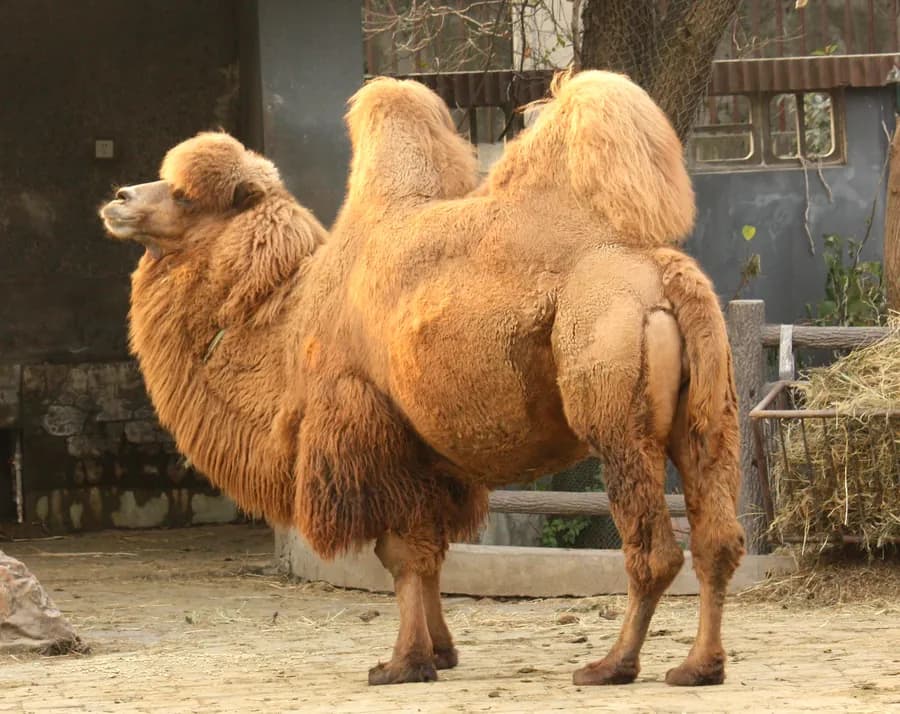
🐃Bactrian camel
O camelo-bactriano, camelo-asiático ou simplesmente camelo (Camelus bactrianus) é um mamífero nativo da região das estepes da Ásia Central, mais precisamente, da região da Báctria; daí o seu nome. Quase todos os animais desta espécie vivem domesticados pelas populações locais, mas ainda existem mais de mil espécimes na Mongólia e noroeste da República Popular da China. É muito parecido com a outra espécie da família Camelidae, que pode ser encontrado atualmente no nordeste da África e na parte ocidental da Ásia, o camelo-árabe ou dromedário (Camelus dromedarius). O camelo-bactriano distingue-se do dromedário pelo seu tamanho maior e pela presença de duas corcovas. Pensa-se que este último poderá ser um descendente do camelo-bactriano. Este animal suporta condições climáticas verdadeiramente extremas, especialmente no Tibete e outras áreas montanhosas da Ásia Central, onde as temperaturas no verão podem chegar a 40 °C de dia e à noite são inferiores a 0 °C. Pode resistir grandes períodos de tempo sem comer nem beber e é muito forte, podendo caminhar 47 quilômetros por dia carregando pesos superiores a 450 kg. É encontrado em estado selvagem somente no Deserto de Gobi. Dele também se aproveita a carne, leite e pele.
Text: Wikipedia, CC BY-SA 4.0.
The IUCN Red List has not assessed Camelus bactrianus yet.
- Body mass
- 475 kg
- Body length
- not recorded
- Shoulder height
- 1.7 m
- Top speed
- not recorded
- Bite force
- not recorded
- Maximum lifespan
- 35 years
Everything we know about the Bactrian camel
Typical adult figures. Where a value is an estimate rather than a measurement, it says so.
Body mass475 kgAnAgeDetails ↓Hide ↑
data quality: high
Source: AnAge · AnAge build 15, 2023-07-03 (HAGR) · CC BY 3.0
Shoulder height1.7 m1.6–1.8 m · typical rangenot statedDetails ↓Hide ↑
SDZWA factsheet body-measurements table, shoulder height: '160-180 cm (5.2-5.9 ft)', data attributed to Franklin (2011). Midpoint of the published range. Domestic Bactrian camel.
Source: Franklin 2011, Family Camelidae, in Wilson & Mittermeier (eds), Handbook of the Mammals of the World Vol 2, Lynx Edicions; as compiled in San Diego Zoo Wildlife Alliance Extant Camels factsheet, https://ielc.libguides.com/sdzg/factsheets/extantcamels/characteristics · see citation
Maximum lifespan35 yearsAnAgeDetails ↓Hide ↑
data quality: high
Source: AnAge · AnAge build 15, 2023-07-03 (HAGR) · CC BY 3.0
Gestation1.1 yearsAnAgeDetails ↓Hide ↑
data quality: high
Source: AnAge · AnAge build 15, 2023-07-03 (HAGR) · CC BY 3.0
Litter size1AnAgeDetails ↓Hide ↑
data quality: high
Source: AnAge · AnAge build 15, 2023-07-03 (HAGR) · CC BY 3.0
Volume l475 LaverageDetails ↓Hide ↑
Body mass at ~1.0 kg/L, the density of vertebrate tissue.
average = a mean across sexes or species in a group.
Not recorded for Bactrian camel yet: body length, top speed, bite force.
Family tree
- kingdomAnimalia
- ›phylumChordata
- ›classMammalia
- ›orderArtiodactyla
- ›familyCamelidae
- ›genusCamelus
- ›speciesCamelus bactrianus
- classMammals · Mammalia
- orderEven-toed hoofed animals · Artiodactyla
- familyCamelidae
- genusCamelus
All 14 branches ↓Fewer branches ↑
- kingdomMetazoa
- phylumChordata
- subphylumCraniata
- subphylumVertebrata
- superclassGnathostomata
- superclassSarcopterygii
- superclassTetrapoda
- classMammals · Mammalia
- subclassTheria
- superorderLaurasiatheria
- orderEven-toed hoofed animals · Artiodactyla
- suborderTylopoda
- familyCamelidae
- genusCamelus
More about the Bactrian camel


No videos of the Bactrian camel yet.
We have 44,653 videos so far, and none of them features this animal yet.
All videos →Compare the Bactrian camel
Pick a tool — the Bactrian camel is already selected.
Compare every stat with any other animal.
Stand them on the same floor and see who's bigger.
How speed, brain and bite scale with body size. This animal isn't in the sample yet.
See where it sits in the tree of life.