
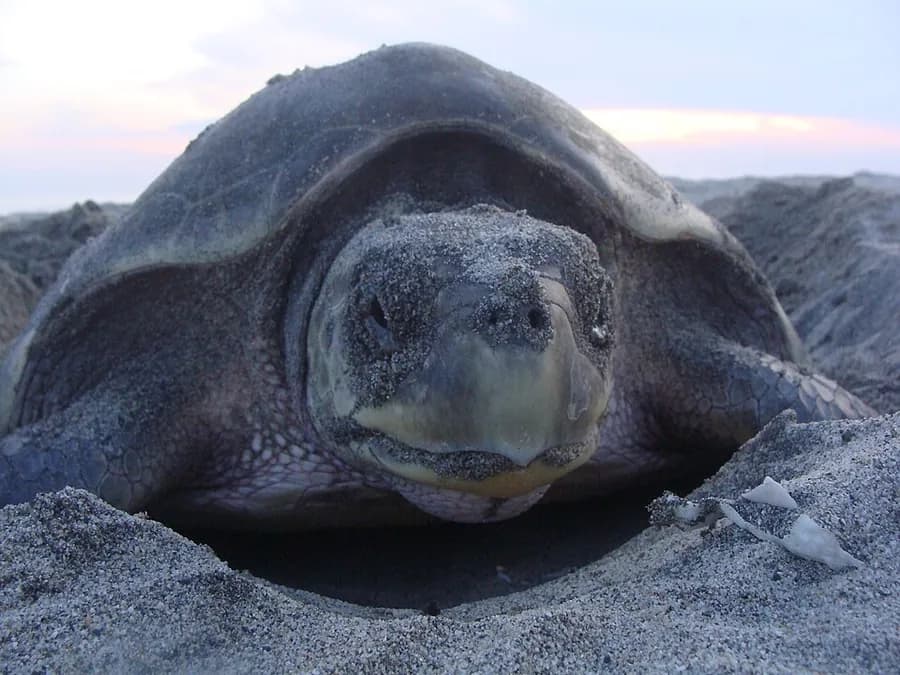
🐢Olive ridley sea turtle
Żółw oliwkowy (Lepidochelys olivacea) – gatunek gada z rodziny żółwi morskich (Cheloniidae), najmniejszy z całej rodziny. Jest najliczniejszym żółwiem na świecie i jednym z najbardziej wykorzystywanych przez ludzi (polowania, handel jajami). Żółw oliwkowy ma najbardziej zaokrąglony karapaks spośród żółwi morskich, często jest on szerszy niż dłuższy. Podobnie jak inne żółwie morskie, składa jaja na plażach, jednak nie robi tego w pojedynkę, a w bardzo licznych grupach. Jest głównie mięsożercą, czasami odżywia się również pokarmem roślinnym w zależności od dostępności pożywienia. Pomiędzy okresami godowymi i lęgowymi odbywa długie migracje, często przekraczające kilka tysięcy kilometrów. Żółwie oliwkowe występują w Oceanie Atlantyckim, Indyjskim i Spokojnym.
Text: Wikipedia, CC BY-SA 4.0.
IUCN Red List assessment, 2008.
- Body mass
- 33 kg
- Body length
- not recorded
- Shoulder height
- not recorded
- Top speed
- not recorded
- Bite force
- not recorded
- Maximum lifespan
- 41 years
Everything we know about the Olive ridley sea turtle
Typical adult figures. Where a value is an estimate rather than a measurement, it says so.
Body mass33 kgmaximum recordedReptTraitsOther figures ↓Hide ↑
Source: ReptTraits · v1.2 (Oskyrko et al. 2024) · CC BY 4.0
Figures vary
- 43 kgSeaLifeBasev25.04SeaLifeBase populates Weight independently of Length; the two are not guaranteed to describe the same individual. Verify before publishing.
Maximum lifespan41 yearsmaximum recordedReptTraitsDetails ↓Hide ↑
Source: ReptTraits · v1.2 (Oskyrko et al. 2024) · CC BY 4.0
DietCarnivorousReptTraitsDetails ↓Hide ↑
Source: ReptTraits · v1.2 (Oskyrko et al. 2024) · CC BY 4.0
Activity cycleDiurnalReptTraitsDetails ↓Hide ↑
Source: ReptTraits · v1.2 (Oskyrko et al. 2024) · CC BY 4.0
Foraging modeACTReptTraitsDetails ↓Hide ↑
Source: ReptTraits · v1.2 (Oskyrko et al. 2024) · CC BY 4.0
VenomousNoReptTraitsDetails ↓Hide ↑
Source: ReptTraits · v1.2 (Oskyrko et al. 2024) · CC BY 4.0
Carapace length0.75 mtypical adult, carapace lengthSeaLifeBaseOther figures ↓Hide ↑
Source: SeaLifeBase · v25.04 · CC BY-NC 4.0
Figures vary
- 0.76 mSeaLifeBasev25.04
Snout–vent length0.61 mmaximum recordedReptTraitsDetails ↓Hide ↑
Source: ReptTraits · v1.2 (Oskyrko et al. 2024) · CC BY 4.0
Volume l33 LaverageDetails ↓Hide ↑
Body mass at ~1.0 kg/L, the density of vertebrate tissue.
average = a mean across sexes or species in a group.
Not recorded for Olive ridley sea turtle yet: body length, shoulder height, top speed, bite force.
Family tree
- kingdomAnimalia
- ›phylumChordata
- ›classTestudines
- ›familyCheloniidae
- ›genusLepidochelys
- ›speciesLepidochelys olivacea
- orderTurtles & tortoises · Testudines
- superfamilyChelonioidea
- familyCheloniidae
- genusLepidochelys
All 13 branches ↓Fewer branches ↑
- kingdomMetazoa
- phylumChordata
- subphylumCraniata
- subphylumVertebrata
- superclassGnathostomata
- superclassSarcopterygii
- superclassTetrapoda
- orderSauria
- orderTurtles & tortoises · Testudines
- suborderCryptodira
- superfamilyChelonioidea
- familyCheloniidae
- genusLepidochelys
More about the Olive ridley sea turtle
No videos of the Olive ridley sea turtle yet.
We have 44,653 videos so far, and none of them features this animal yet.
All videos →Compare the Olive ridley sea turtle
Pick a tool — the Olive ridley sea turtle is already selected.
Compare every stat with any other animal.
Stand them on the same floor and see who's bigger.
How speed, brain and bite scale with body size. This animal isn't in the sample yet.
See where it sits in the tree of life.