
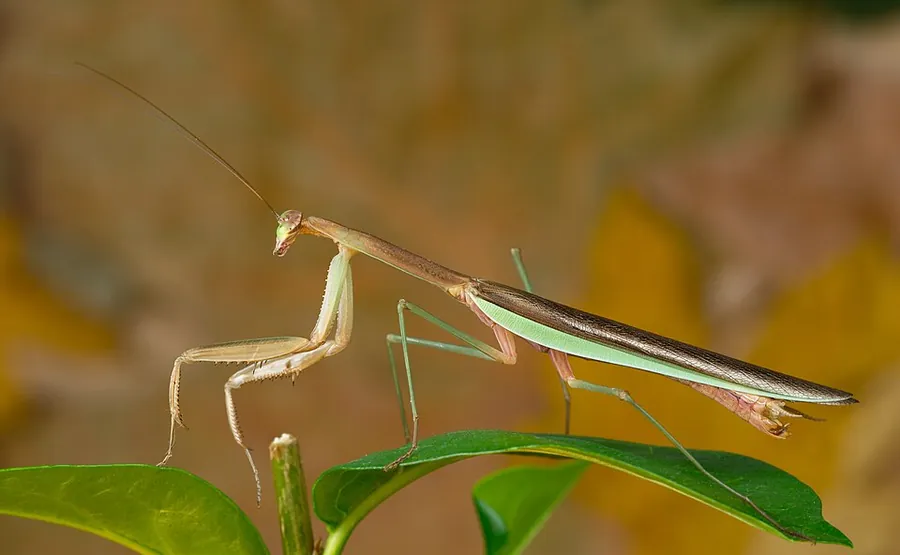
🦗Chinese mantis
De Chinese bidsprinkhaan (Tenodera sinensis) soms ook wel foutief Tenodera aridifolia sinensis genoemd, komt oorspronkelijk voor in China. In 1895 werd de soort in Noord-Amerika geïntroduceerd als plaagcontrole. Sindsdien komt ze in de Verenigde Staten wijd verspreid voor. De eiercocon of oötheek kan tot 200 eitjes bevatten, de cocons van de Chinese bidsprinkhaan worden in gespecialiseerde handelszaken verkocht. De tot 10 cm grote bidsprinkhaan eet overwegend insecten, hoewel ook kleine gewervelde dieren zoals reptielen en amfibieën gegeten worden. Soms treedt ook kannibalisme op.
Text: Wikipedia, CC BY-SA 4.0.
The IUCN Red List has not assessed Tenodera sinensis yet.
- Body mass
- not recorded
- Body length
- not recorded
- Shoulder height
- not recorded
- Top speed
- not recorded
- Bite force
- not recorded
- Maximum lifespan
- not recorded
Everything we know about the Chinese mantis
Typical adult figures. Where a value is an estimate rather than a measurement, it says so.
No measurements for Chinese mantis yet.
Family tree
- kingdomAnimalia
- ›phylumArthropoda
- ›classInsecta
- ›orderMantodea
- ›familyMantidae
- ›genusTenodera
- ›speciesTenodera sinensis
- classInsects · Insecta
- orderMantodea
- tribePolyspilotini
- genusTenodera
All 9 branches ↓Fewer branches ↑
- kingdomMetazoa
- phylumArthropoda
- subphylumHexapoda
- classInsects · Insecta
- subclassPterygota
- genusDictyoptera
- orderMantodea
- tribePolyspilotini
- genusTenodera
More about the Chinese mantis


No videos of the Chinese mantis yet.
We have 44,653 videos so far, and none of them features this animal yet.
All videos →Compare the Chinese mantis
Pick a tool — the Chinese mantis is already selected.
Compare every stat with any other animal.
Stand them on the same floor and see who's bigger.
How speed, brain and bite scale with body size. This animal isn't in the sample yet.
See where it sits in the tree of life.