
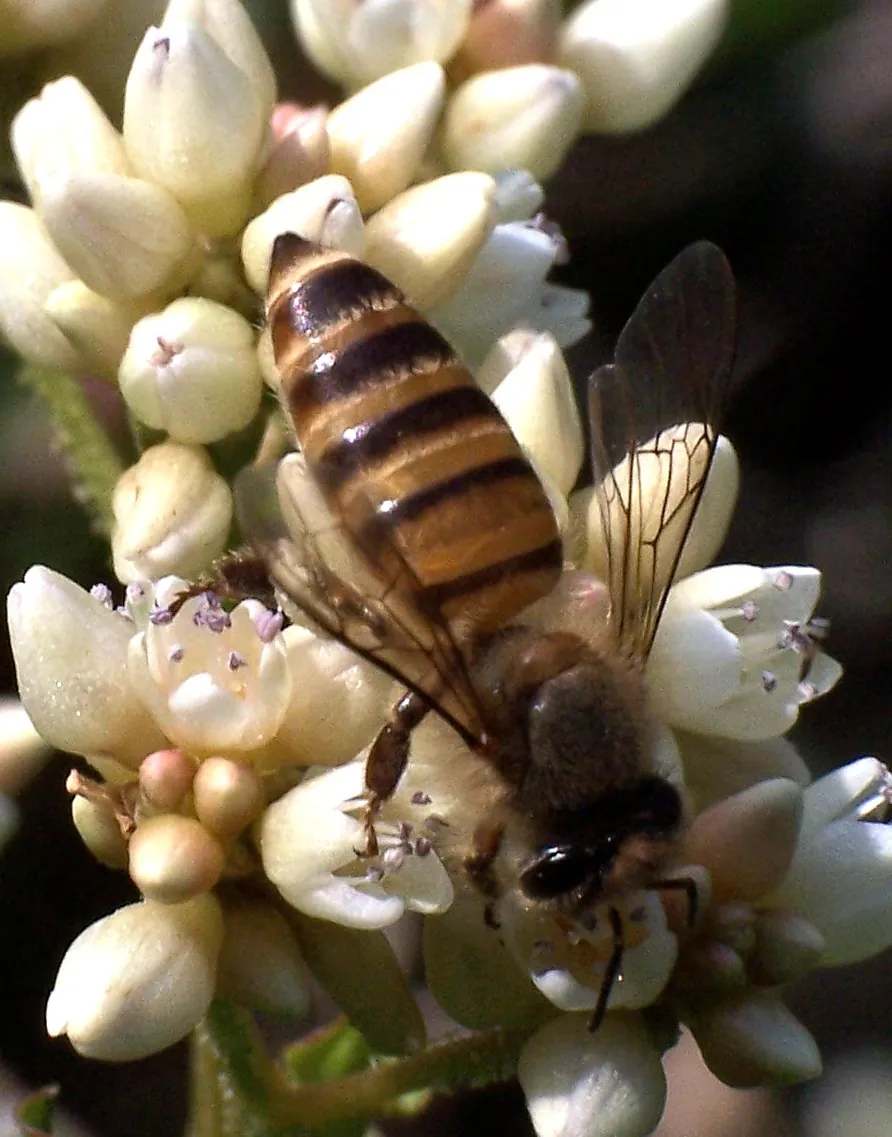
🪲Apis cerana
Apis cerana, the eastern honey bee, Asiatic honey bee or Asian honey bee, is a species of honey bee native to South, Southeast and East Asia. This species is the sister species of Apis koschevnikovi and both are in the same subgenus as the western (European) honey bee, Apis mellifera. A. cerana is known to live sympatrically along with Apis koschevnikovi within the same geographic location. Apis cerana colonies are known for building nests consisting of multiple combs in cavities containing a small entrance, presumably for defense against invasion by individuals of another nest. The diet of this honey bee species consists mostly of pollen and nectar, or honey. Moreover, Apis cerana is known for its highly social behavior, reflective of its classification as a type of honey bee.
Text: Wikipedia, CC BY-SA 4.0.
The IUCN Red List has not assessed Apis cerana yet.
- Body mass
- not recorded
- Body length
- not recorded
- Shoulder height
- not recorded
- Top speed
- not recorded
- Bite force
- not recorded
- Maximum lifespan
- not recorded
Everything we know about the Apis cerana
Typical adult figures. Where a value is an estimate rather than a measurement, it says so.
No measurements for Apis cerana yet.
Family tree
- kingdomAnimalia
- ›phylumArthropoda
- ›classInsecta
- ›orderHymenoptera
- ›familyApidae
- ›genusApis
- ›speciesApis cerana
- classInsects · Insecta
- subclassPterygota
- orderAnts, bees & wasps · Hymenoptera
- superfamilyApoidea
All 7 branches ↓Fewer branches ↑
- kingdomMetazoa
- phylumArthropoda
- subphylumHexapoda
- classInsects · Insecta
- subclassPterygota
- orderAnts, bees & wasps · Hymenoptera
- superfamilyApoidea
More about the Apis cerana
No videos of the Apis cerana yet.
We have 44,653 videos so far, and none of them features this animal yet.
All videos →Compare the Apis cerana
Pick a tool — the Apis cerana is already selected.
Compare every stat with any other animal.
Stand them on the same floor and see who's bigger.
How speed, brain and bite scale with body size. This animal isn't in the sample yet.
See where it sits in the tree of life.