
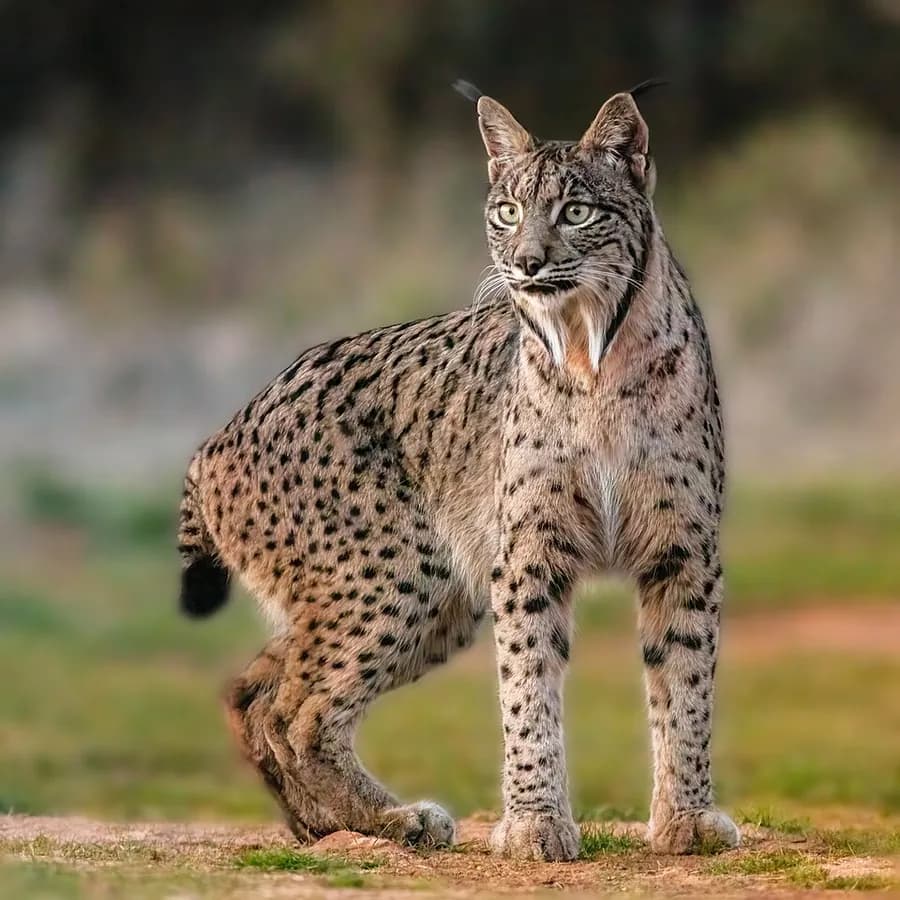
🐈Iberian lynx
Der Pardelluchs (Lynx pardinus), auch Iberischer Luchs genannt, ist ein äußerst seltener Luchs mit Habitaten in Spanien und Portugal. Lange als Unterart des im nördlichen Eurasien vertretenen Eurasischen Luchses geltend, wurde sein stammesgeschichtlicher Ursprung zwischenzeitlich allerdings in Europas Südwesten verortet und der Pardelluchs somit als eigenständige Art erfasst. Seine Spezialisierung auf die Jagd nach Wildkaninchen (Oryctolagus cuniculus) in mediterranen Buschwäldern, deren Population nach einem Myxomatose-Ausbruch in den 1950er-Jahren kollabierte, resultierte zwischenzeitlich in einem zunehmend fragmentierten Verbreitungsgebiet des Pardelluchses bis hin zum Status als eine der am stärksten vom Aussterben bedrohten Katzenarten. Portugal und Spanien reagierten zur Jahrtausendwende mit einem Erhaltungszuchtprogramm, woraufhin sich die Population innerhalb von etwa 25 Jahren ca. verzwanzigfachte und der Status auf „gefährdet“ abgeschwächt wurde.
Text: Wikipedia, CC BY-SA 4.0.
IUCN Red List assessment, 2024.
- Body mass
- 10 kg
- Body length
- 1.03 m
- Shoulder height
- not recorded
- Top speed
- not recorded
- Bite force
- not recorded
- Maximum lifespan
- 13 years
Everything we know about the Iberian lynx
Typical adult figures. Where a value is an estimate rather than a measurement, it says so.
Body mass10 kgCOMBINEOther figures ↓Hide ↑
Source: COMBINE · v1 (Soria et al. 2021) · CC BY 4.0
Figures vary
- 11 kgAnAgeAnAge build 15, 2023-07-03 (HAGR)data quality: low
Body length1.03 mCOMBINEDetails ↓Hide ↑
Source: COMBINE · v1 (Soria et al. 2021) · CC BY 4.0
Maximum lifespan13 yearsCOMBINEDetails ↓Hide ↑
Source: COMBINE · v1 (Soria et al. 2021) · CC BY 4.0
Generation length4.32 yearsCOMBINEDetails ↓Hide ↑
Source: COMBINE · v1 (Soria et al. 2021) · CC BY 4.0
Gestation68 daysCOMBINEOther figures ↓Hide ↑
Source: COMBINE · v1 (Soria et al. 2021) · CC BY 4.0
Figures vary
- 68 daysAnAgeAnAge build 15, 2023-07-03 (HAGR)data quality: low
Litter sizeabout 3COMBINEOther figures ↓Hide ↑
Source: COMBINE · v1 (Soria et al. 2021) · CC BY 4.0
Figures vary
- 2.5AnAgeAnAge build 15, 2023-07-03 (HAGR)data quality: low
Trophic levelCarnivoreCOMBINEDetails ↓Hide ↑
Source: COMBINE · v1 (Soria et al. 2021) · CC BY 4.0
Activity cycleNocturnalCOMBINEDetails ↓Hide ↑
Source: COMBINE · v1 (Soria et al. 2021) · CC BY 4.0
Home range7.19 km²COMBINEDetails ↓Hide ↑
Source: COMBINE · v1 (Soria et al. 2021) · CC BY 4.0
Population density0.32 per km²COMBINEDetails ↓Hide ↑
Source: COMBINE · v1 (Soria et al. 2021) · CC BY 4.0
Volume l10 LaverageDetails ↓Hide ↑
Body mass at ~1.0 kg/L, the density of vertebrate tissue.
average = a mean across sexes or species in a group.
Not recorded for Iberian lynx yet: shoulder height, top speed, bite force.
Family tree
- kingdomAnimalia
- ›phylumChordata
- ›classMammalia
- ›orderCarnivora
- ›familyFelidae
- ›genusLynx
- ›speciesLynx pardinus
- classMammals · Mammalia
- orderCarnivorans · Carnivora
- familyFelidae
- genusLynx
All 14 branches ↓Fewer branches ↑
- kingdomMetazoa
- phylumChordata
- subphylumCraniata
- subphylumVertebrata
- superclassGnathostomata
- superclassSarcopterygii
- superclassTetrapoda
- classMammals · Mammalia
- subclassTheria
- superorderLaurasiatheria
- orderCarnivorans · Carnivora
- suborderFeliformia
- familyFelidae
- genusLynx
More about the Iberian lynx


Tiere vor der Kamera
Echtes Filmmaterial von den Tieren dieser Website – beim Jagen, beim Kämpfen und beim ganz normalen Alltag.
Compare the Iberian lynx
Pick a tool — the Iberian lynx is already selected.
Compare every stat with any other animal.
Stand them on the same floor and see who's bigger.
How speed, brain and bite scale with body size. This animal isn't in the sample yet.
See where it sits in the tree of life.