
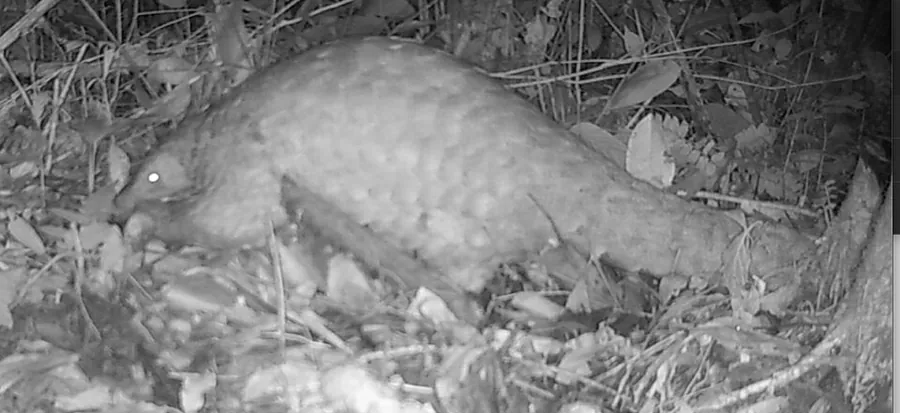
🦔Giant pangolin
Das Riesenschuppentier (Smutsia gigantea, teilweise auch Manis gigantea) ist eine Säugetierart aus der Familie der Schuppentiere (Manidae). Es ist der größte Vertreter dieser Gruppe. Das Verbreitungsgebiet umfasst das westliche und mittlere Afrika, wo die Tiere verschiedenste bewaldete Landschaften bewohnen. Sie leben einzelgängerisch und sind nachtaktiv. Zudem ist das Riesenschuppentier ein guter Bodengräber, der sehr kräftige Vordergliedmaßen besitzt und mitunter relativ lange, unterirdische Tunnel anlegt. Als Hauptnahrung dienen überwiegend staatenbildende Insekten. Die versteckte Lebensweise bedingt, dass es nur wenige Informationen über das genaue Verhalten gibt. Das Fleisch des Riesenschuppentiers wird vom Menschen zu Nahrungszwecken genutzt, teilweise werden der Schuppentierart auch Heilkräfte nachgesagt, sodass sie in einigen lokalen medizinischen Gebräuchen Verwendung findet. Der dadurch ausgelöste hohe Jagddruck hat zum Rückgang einzelner Bestände geführt. Aufgrund dessen gilt das Riesenschuppentier als bedroht.
Text: Wikipedia, CC BY-SA 4.0.
IUCN Red List assessment, 2019.
- Body mass
- 33 kg
- Body length
- 1.01 m
- Shoulder height
- not recorded
- Top speed
- not recorded
- Bite force
- not recorded
- Maximum lifespan
- 4.57 years
Everything we know about the Giant pangolin
Typical adult figures. Where a value is an estimate rather than a measurement, it says so.
Body mass33 kgCOMBINEDetails ↓Hide ↑
Source: COMBINE · v1 (Soria et al. 2021) · CC BY 4.0
Body length1.01 mestimatedCOMBINEDetails ↓Hide ↑
Source: COMBINE · v1 (Soria et al. 2021) · CC BY 4.0
Maximum lifespan4.57 yearsCOMBINEDetails ↓Hide ↑
Source: COMBINE · v1 (Soria et al. 2021) · CC BY 4.0
Generation length5 yearsCOMBINEDetails ↓Hide ↑
Source: COMBINE · v1 (Soria et al. 2021) · CC BY 4.0
Age at maturity2.1 yearsCOMBINEDetails ↓Hide ↑
Source: COMBINE · v1 (Soria et al. 2021) · CC BY 4.0
Gestation133 daysestimatedCOMBINEDetails ↓Hide ↑
Source: COMBINE · v1 (Soria et al. 2021) · CC BY 4.0
Litter size1estimatedCOMBINEDetails ↓Hide ↑
Source: COMBINE · v1 (Soria et al. 2021) · CC BY 4.0
Trophic levelCarnivoreCOMBINEDetails ↓Hide ↑
Source: COMBINE · v1 (Soria et al. 2021) · CC BY 4.0
Activity cycleNocturnalCOMBINEDetails ↓Hide ↑
Source: COMBINE · v1 (Soria et al. 2021) · CC BY 4.0
Volume l33 LaverageDetails ↓Hide ↑
Body mass at ~1.0 kg/L, the density of vertebrate tissue.
estimated = a model's estimate for a species nobody has measured; average = a mean across sexes or species in a group.
Not recorded for Giant pangolin yet: shoulder height, top speed, bite force.
Family tree
- kingdomAnimalia
- ›phylumChordata
- ›classMammalia
- ›orderPholidota
- ›familyManidae
- ›genusManis
- ›speciesManis gigantea
Lineage not available yet.
More about the Giant pangolin


Tiere vor der Kamera
Echtes Filmmaterial von den Tieren dieser Website – beim Jagen, beim Kämpfen und beim ganz normalen Alltag.
Compare the Giant pangolin
Pick a tool — the Giant pangolin is already selected.
Compare every stat with any other animal.
Stand them on the same floor and see who's bigger.
Does it punch above its weight? Its stats against what body size predicts.
See where it sits in the tree of life.