
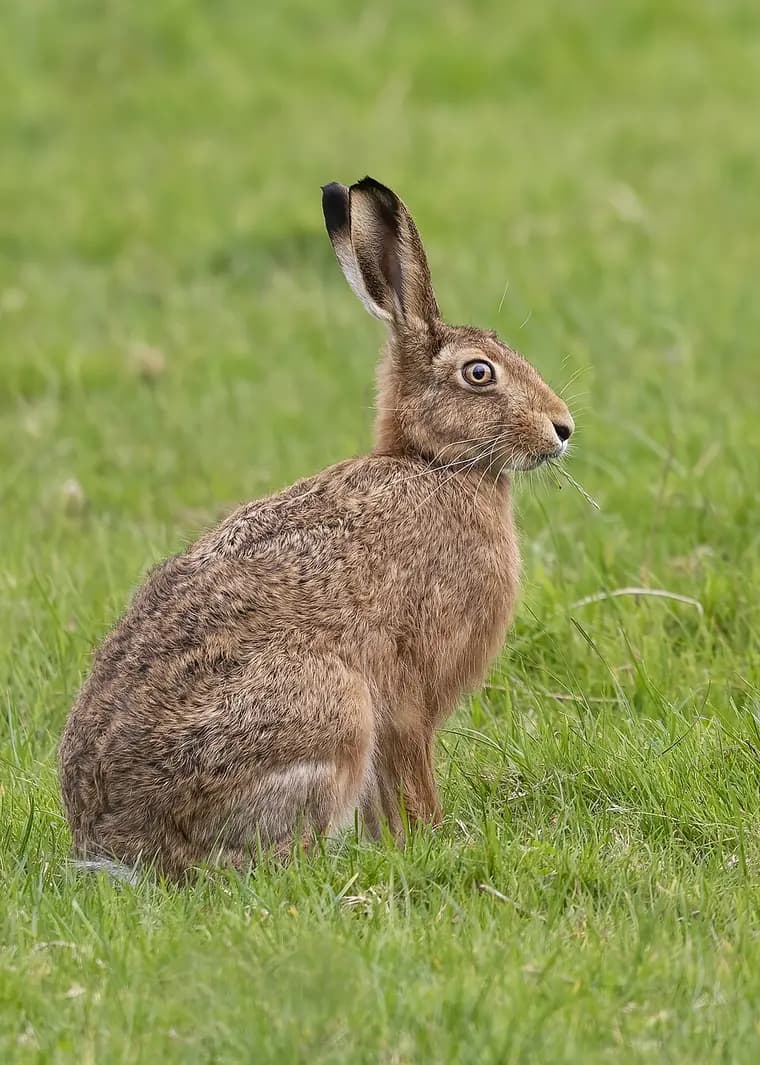
🐇European hare
Der Feldhase (Lepus europaeus), kurz auch Hase genannt, ist ein Säugetier aus der Familie der Hasen (Leporidae). Die Art besiedelt offene und halboffene Landschaften. Das natürliche Verbreitungsgebiet umfasst weite Teile der südwestlichen Paläarktis; durch zahlreiche Einbürgerungen kommt der Feldhase heute jedoch auf fast allen Kontinenten vor. Aufgrund der starken Intensivierung der Landwirtschaft ist der Bestand des Feldhasen in vielen Regionen Europas rückläufig. Die Schutzgemeinschaft Deutsches Wild erklärte den Feldhasen für das Jahr 2001 und erneut 2015 zum Tier des Jahres.
Text: Wikipedia, CC BY-SA 4.0.
IUCN Red List assessment, 2019.
- Body mass
- 3.67 kg
- Body length
- 0.61 m
- Shoulder height
- not recorded
- Top speed
- not recorded
- Bite force
- not recorded
- Maximum lifespan
- 12 years
Everything we know about the European hare
Typical adult figures. Where a value is an estimate rather than a measurement, it says so.
Body mass3.67 kgCOMBINEOther figures ↓Hide ↑
Source: COMBINE · v1 (Soria et al. 2021) · CC BY 4.0
Figures vary
- 4.17 kgAnAgeAnAge build 15, 2023-07-03 (HAGR)data quality: acceptable
Body length0.61 mCOMBINEDetails ↓Hide ↑
Source: COMBINE · v1 (Soria et al. 2021) · CC BY 4.0
Brain mass14 gCOMBINEDetails ↓Hide ↑
Source: COMBINE · v1 (Soria et al. 2021) · CC BY 4.0
Maximum lifespan12 yearsCOMBINEOther figures ↓Hide ↑
Source: COMBINE · v1 (Soria et al. 2021) · CC BY 4.0
Figures vary
- 11 yearsAnAgeAnAge build 15, 2023-07-03 (HAGR)data quality: acceptable
Generation length2 yearsCOMBINEDetails ↓Hide ↑
Source: COMBINE · v1 (Soria et al. 2021) · CC BY 4.0
Age at maturity211 daysCOMBINEDetails ↓Hide ↑
Source: COMBINE · v1 (Soria et al. 2021) · CC BY 4.0
Gestation42 daysCOMBINEOther figures ↓Hide ↑
Source: COMBINE · v1 (Soria et al. 2021) · CC BY 4.0
Figures vary
- 42 daysAnAgeAnAge build 15, 2023-07-03 (HAGR)data quality: acceptable
Litter sizeabout 2COMBINEOther figures ↓Hide ↑
Source: COMBINE · v1 (Soria et al. 2021) · CC BY 4.0
Figures vary
- 2AnAgeAnAge build 15, 2023-07-03 (HAGR)data quality: acceptable
Trophic levelHerbivoreCOMBINEDetails ↓Hide ↑
Source: COMBINE · v1 (Soria et al. 2021) · CC BY 4.0
Activity cycleNocturnalCOMBINEDetails ↓Hide ↑
Source: COMBINE · v1 (Soria et al. 2021) · CC BY 4.0
Home range0.31 km²COMBINEDetails ↓Hide ↑
Source: COMBINE · v1 (Soria et al. 2021) · CC BY 4.0
Population density47 per km²COMBINEDetails ↓Hide ↑
Source: COMBINE · v1 (Soria et al. 2021) · CC BY 4.0
Volume l3.7 LaverageDetails ↓Hide ↑
Body mass at ~1.0 kg/L, the density of vertebrate tissue.
average = a mean across sexes or species in a group.
Not recorded for European hare yet: shoulder height, top speed, bite force.
Family tree
- kingdomAnimalia
- ›phylumChordata
- ›classMammalia
- ›orderLagomorpha
- ›familyLeporidae
- ›genusLepus
- ›speciesLepus europaeus
- classMammals · Mammalia
- orderRabbits & hares · Lagomorpha
- familyLeporidae
- genusLepus
All 13 branches ↓Fewer branches ↑
- kingdomMetazoa
- phylumChordata
- subphylumCraniata
- subphylumVertebrata
- superclassGnathostomata
- superclassSarcopterygii
- superclassTetrapoda
- classMammals · Mammalia
- subclassTheria
- superorderEuarchontoglires
- orderRabbits & hares · Lagomorpha
- familyLeporidae
- genusLepus
More about the European hare


No videos of the European hare yet.
We have 44,653 videos so far, and none of them features this animal yet.
All videos →Compare the European hare
Pick a tool — the European hare is already selected.
Compare every stat with any other animal.
Stand them on the same floor and see who's bigger.
How speed, brain and bite scale with body size. This animal isn't in the sample yet.
See where it sits in the tree of life.