
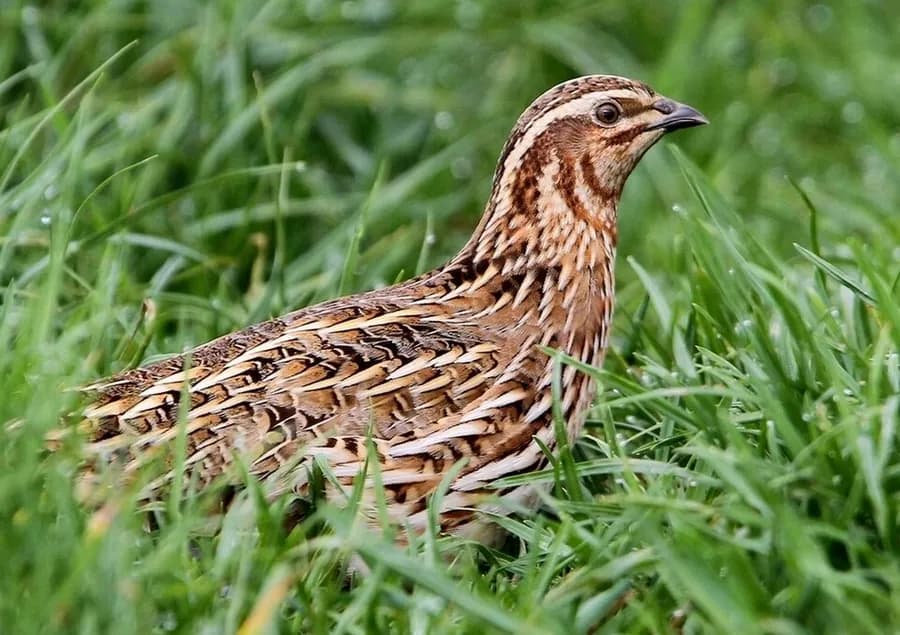
🐔Common Quail
Die Wachtel (Coturnix coturnix) ist ein ungefähr starengroßer, im Verborgenen lebender Vogel, der in fast ganz Europa, dem westlichen Teil Asiens und einem großen Teil Afrikas vorkommt. In Europa ist sie der kleinste Hühnervogel. Während der weit vernehmbare sogenannte Wachtelschlag gelegentlich zu hören ist, sind die unauffälligen Vögel nur selten zu sehen. Sie sind während der Fortpflanzungszeit vor allem in der Morgen- und Abenddämmerung aktiv. Zum Höhepunkt der Balz sind sie auch gelegentlich während des Tages zu vernehmen. Wachteln sind Bodenvögel und brüten in trockenen Wiesen, Ackerland, Steppen und lichtem Buschland. Wegen ihrer „Bodenständigkeit“ gelten Wachteln, auch in der Kunst, als Sinnbild der Demut. In Mitteleuropa gehen die Bestände seit vielen Jahren zurück. Ursache des Bestandsrückgangs ist die Lebensraumzerstörung sowie in Teilen des Verbreitungsgebiets die Jagd. In Deutschland ist die Wachtel bereits seit vielen Jahren von der Jagd ganzjährig geschont.
Text: Wikipedia, CC BY-SA 4.0.
IUCN Red List assessment, 2018.
- Body mass
- 0.1 kg
- Body length
- not recorded
- Shoulder height
- not recorded
- Top speed
- not recorded
- Bite force
- not recorded
- Maximum lifespan
- 15 years
Everything we know about the Common Quail
Typical adult figures. Where a value is an estimate rather than a measurement, it says so.
Body mass0.1 kgAVONETOther figures ↓Hide ↑
Source: AVONET · v1.1 (Tobias et al. 2022) · CC BY 4.0
Figures vary
- 0.1 kgAnAgeAnAge build 15, 2023-07-03 (HAGR)data quality: acceptable
Tail length0.04 mAVONETDetails ↓Hide ↑
Source: AVONET · v1.1 (Tobias et al. 2022) · CC BY 4.0
Wing length0.11 mAVONETDetails ↓Hide ↑
Source: AVONET · v1.1 (Tobias et al. 2022) · CC BY 4.0
Beak length0.02 mAVONETDetails ↓Hide ↑
Source: AVONET · v1.1 (Tobias et al. 2022) · CC BY 4.0
Tarsus length0.02 mAVONETDetails ↓Hide ↑
Source: AVONET · v1.1 (Tobias et al. 2022) · CC BY 4.0
Maximum lifespan15 yearsAnAgeDetails ↓Hide ↑
data quality: acceptable
Source: AnAge · AnAge build 15, 2023-07-03 (HAGR) · CC BY 3.0
Trophic levelHerbivoreAVONETDetails ↓Hide ↑
Source: AVONET · v1.1 (Tobias et al. 2022) · CC BY 4.0
HabitatHuman ModifiedAVONETDetails ↓Hide ↑
Source: AVONET · v1.1 (Tobias et al. 2022) · CC BY 4.0
LifestyleTerrestrialAVONETDetails ↓Hide ↑
Source: AVONET · v1.1 (Tobias et al. 2022) · CC BY 4.0
Volume l0.1 LaverageDetails ↓Hide ↑
Body mass at ~1.0 kg/L, the density of vertebrate tissue.
average = a mean across sexes or species in a group.
Not recorded for Common Quail yet: body length, shoulder height, top speed, bite force.
Family tree
- kingdomAnimalia
- ›phylumChordata
- ›classAves
- ›orderGalliformes
- ›familyPhasianidae
- ›genusCoturnix
- ›speciesCoturnix coturnix
- orderSauria
- classBirds · Aves
- superorderGalloanserae
- orderGamebirds · Galliformes
All 11 branches ↓Fewer branches ↑
- kingdomMetazoa
- phylumChordata
- subphylumCraniata
- subphylumVertebrata
- superclassGnathostomata
- superclassSarcopterygii
- superclassTetrapoda
- orderSauria
- classBirds · Aves
- superorderGalloanserae
- orderGamebirds · Galliformes
More about the Common Quail


No videos of the Common Quail yet.
We have 44,653 videos so far, and none of them features this animal yet.
All videos →Compare the Common Quail
Pick a tool — the Common Quail is already selected.
Compare every stat with any other animal.
Stand them on the same floor and see who's bigger.
How speed, brain and bite scale with body size. This animal isn't in the sample yet.
See where it sits in the tree of life.