
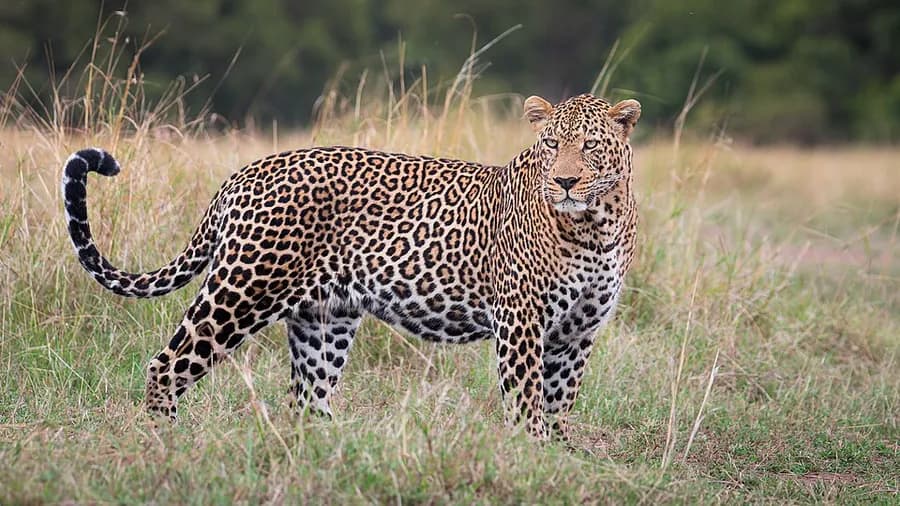
🐆Leopard
النَّمِرُ (الاسم العلمي: Panthera pardus) هو أحد أنواع فصيلة السنوريات وأصغر السنوريات الأربعة الكبرى المنتمية لجنس النمور (باللاتينية: Panthera)؛ حيث يُعد كل من الببر والأسد واليغور أكبر منه حجمًا. تنتشر النمور اليوم بشكل رئيسي تقريبًا في إفريقيا جنوب الصحراء الكبرى، وبعض المناطق في آسيا الجنوبية والشرقية حيث توجد منها جمهرات متجزئة في باكستان، الهند، إندونيسيا، ماليزيا، الصين، وجنوب شبه الجزيرة العربية، بعد أن كان موطنها في السابق يشمل جميع الدول الممتدة من شبه الجزيرة الكوريّة حتى جنوب إفريقيا، أي مناطق آسيا الشرقية، الجنوبية، الوسطى، الشرق الأوسط، تركيا، وجميع أنحاء إفريقيا. يعود السبب وراء تراجع أعداد النمور بشكل سريع إلى الصيد وفقدان المسكن كنتيجة للتمدن المتواتر في موائله ذات الكثافة السكانية العالية بالغالب. يُصنَّف النمر من قبل الاتحاد العالمي للحفاظ على الطبيعة على أنه قريب من خطر الانقراض بسبب المخاطر السالف ذكرها، إلا أنه على الرغم من ذلك لا يزال أكثر عددًا من باقي أنواع السنوريات المنتمية لجنس النمر والتي تواجه جميعها مخاطر أكبر من تلك التي تواجهها النمور. يمتلك النمر قوائم قصيرة نسبيّاً، بالإضافة لجسد طويل وجمجمة ضخمة، وهو يشابه اليغور بشكل كبير من حيث الشكل الخارجي، لكنه أصغر حجمًا وأقل امتلاءً. فراء النمر مبقع برقط وردية الشكل تفتقد النقطة المركزية في وسطها التي تظهر عند اليغور، والبعض من النمور يولد وهو يحمل مورثة تسبب له لونًا داكنًا، وهذه النمور إما تكون سوداء كليًّا أو قاتمة جدًا، إلا أنه يبقى بالإمكان رؤية رقطها عندما تقف في ضوء الشمس، وتتشاطر كل من النمور واليغاور هذه المورثة، وتُعرف الحيوانات القاتمة هذه باسم «النمور السوداء» (الإنجليزية: Black panthers). يُعزى نجاح هذا النوع وانتشاره في مناطق متنوعة من العالم القديم إلى عاداته الانتهازية في الصيد ومقدرته على التأقلم مع أشكال مختلفة من المناخات والمساكن، بالإضافة لقدرته على التنقل لمسافة 58 كيلومتر (36 ميل) في الساعة. تقتات النمور على أي نوع من الحيوانات التي تستطيع الإمساك بها، حيث يتراوح حجم طرائدها من حجم الخنافس إلى حمر الزرد. تتراوح المساكن المفضلة عند هذه الحيوانات من غابات الأمطار إلى المناطق الصحراوية. يلعب النمر دورا بيئيّا مماثلًا للدور الذي يلعبه الكوجر في الأمريكتين.
Text: Wikipedia, CC BY-SA 4.0.
IUCN Red List assessment, 2025.
- Body mass
- 53 kg
- Body length
- 1.64 m
- Shoulder height
- 0.72 m
- Top speed
- 58 km/h
- Bite force
- 467 N
- Maximum lifespan
- 27 years
Everything we know about the Leopard
Typical adult figures. Where a value is an estimate rather than a measurement, it says so.
Body mass53 kgCOMBINEOther figures ↓Hide ↑
Source: COMBINE · v1 (Soria et al. 2021) · CC BY 4.0
Figures vary
- 54 kgAnAgeAnAge build 15, 2023-07-03 (HAGR)data quality: high
Body length1.64 mCOMBINEDetails ↓Hide ↑
Source: COMBINE · v1 (Soria et al. 2021) · CC BY 4.0
Shoulder height0.72 maverageOther figures ↓Hide ↑
Species-level value synthesised as the mean of: male.
By sex
- Male0.72 mStein & Hayssen 2013, Mammalian Species 45(900), pp.33-34n=6. Not verified for African leopard specifically.
Top speed58 km/hDetails ↓Hide ↑
Sprint over a short distance, not a sustained pace. Compilations give 58.32 and 59.98 km/h.
Source: Iriarte-Diaz 2002, J Exp Biol 205:2897 and Christiansen 2002, Zool J Linn Soc 136:685; compiled in Hirt et al. 2017, Nat Ecol Evol 1:1116, Supplementary Data · see citation
Bite force467 NDetails ↓Hide ↑
Canine bite modelled by the dry-skull method (Thomason 1991) from a prepared skull; static bite at the canines, gape not stated. Not a live measurement. The skull's estimated body mass was 43.1 kg.
Source: Wroe, McHenry & Thomason 2005, Proc R Soc B 272:619, Table 1 · see citation
Bite force for its size94Details ↓Hide ↑
Bite force normalised for body mass: the residual of canine bite force regressed on body mass, average across the sample set to 100. Above 100 means the animal bites harder than its size predicts. Do not cross-check against Wikipedia's BFQ table, which silently mixes this paper with Christiansen & Wroe 2007 and cites a popular-science book.
Source: Wroe, McHenry & Thomason 2005, Proc R Soc B 272:619, Table 1 · see citation
Brain mass134 gCOMBINEDetails ↓Hide ↑
Source: COMBINE · v1 (Soria et al. 2021) · CC BY 4.0
Maximum lifespan27 yearsCOMBINEOther figures ↓Hide ↑
Source: COMBINE · v1 (Soria et al. 2021) · CC BY 4.0
Figures vary
- 27 yearsAnAgeAnAge build 15, 2023-07-03 (HAGR)data quality: high
Generation length9.31 yearsCOMBINEDetails ↓Hide ↑
Source: COMBINE · v1 (Soria et al. 2021) · CC BY 4.0
Age at maturity2.2 yearsCOMBINEDetails ↓Hide ↑
Source: COMBINE · v1 (Soria et al. 2021) · CC BY 4.0
Gestation97 daysCOMBINEOther figures ↓Hide ↑
Source: COMBINE · v1 (Soria et al. 2021) · CC BY 4.0
Figures vary
- 97 daysAnAgeAnAge build 15, 2023-07-03 (HAGR)data quality: high
Litter sizeabout 2COMBINEOther figures ↓Hide ↑
Source: COMBINE · v1 (Soria et al. 2021) · CC BY 4.0
Figures vary
- 2AnAgeAnAge build 15, 2023-07-03 (HAGR)data quality: high
Trophic levelCarnivoreCOMBINEDetails ↓Hide ↑
Source: COMBINE · v1 (Soria et al. 2021) · CC BY 4.0
Activity cycleNocturnalCOMBINEDetails ↓Hide ↑
Source: COMBINE · v1 (Soria et al. 2021) · CC BY 4.0
Home range19 km²COMBINEDetails ↓Hide ↑
Source: COMBINE · v1 (Soria et al. 2021) · CC BY 4.0
Population density0.07 per km²COMBINEDetails ↓Hide ↑
Source: COMBINE · v1 (Soria et al. 2021) · CC BY 4.0
Volume l53 LaverageDetails ↓Hide ↑
Body mass at ~1.0 kg/L, the density of vertebrate tissue.
average = a mean across sexes or species in a group.
Family tree
- kingdomAnimalia
- ›phylumChordata
- ›classMammalia
- ›orderCarnivora
- ›familyFelidae
- ›genusPanthera
- ›speciesPanthera pardus
- classMammals · Mammalia
- orderCarnivorans · Carnivora
- familyFelidae
- genusPanthera
All 14 branches ↓Fewer branches ↑
- kingdomMetazoa
- phylumChordata
- subphylumCraniata
- subphylumVertebrata
- superclassGnathostomata
- superclassSarcopterygii
- superclassTetrapoda
- classMammals · Mammalia
- subclassTheria
- superorderLaurasiatheria
- orderCarnivorans · Carnivora
- suborderFeliformia
- familyFelidae
- genusPanthera
More about the Leopard


حيوانات أمام الكاميرا
مقاطع حقيقية لحيوانات هذا الموقع — تصطاد، وتتقاتل، وتمضي في حياتها.
Compare the Leopard
Pick a tool — the Leopard is already selected.
Compare every stat with any other animal.
Stand them on the same floor and see who's bigger.
How speed, brain and bite scale with body size. This animal isn't in the sample yet.
See where it sits in the tree of life.